
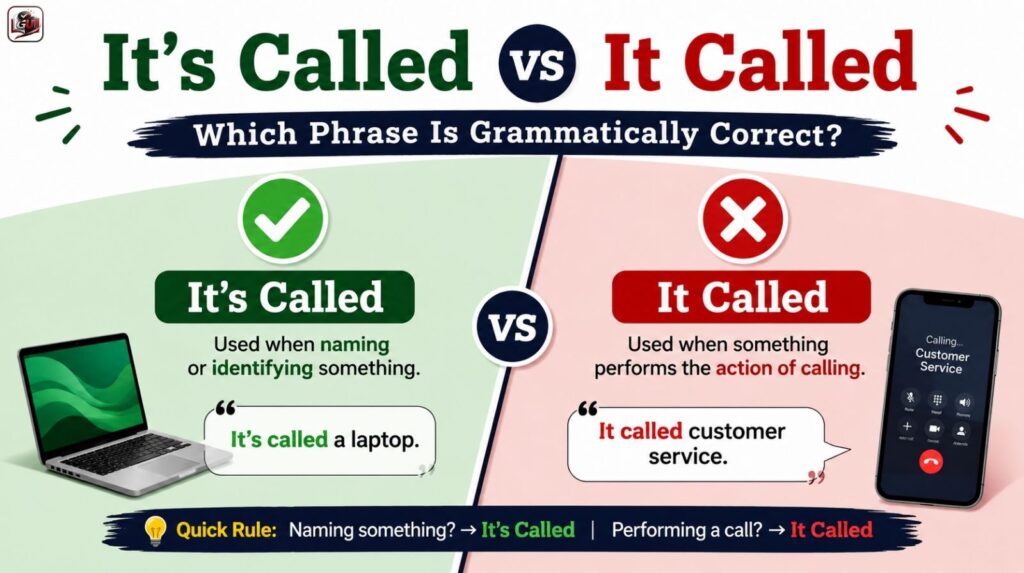
Have you ever written “it called” and wondered whether it sounded right? Many English learners and even native speakers sometimes hesitate when choosing between “it’s called” and “it called.” Although the difference may seem small, using the wrong phrase can make a sentence grammatically incorrect or confusing.
Understanding the distinction is important because these expressions appear frequently in everyday conversations, academic writing, and professional communication. A single missing word can completely change the meaning of a sentence.
In this guide, you’ll learn the correct usage of It’s Called vs It Called, discover common mistakes, review real examples, and understand how native speakers use these phrases naturally.
What Does “It’s Called” Mean?
The phrase “it’s called” is a shortened form of:
It is called
This expression is used when naming, identifying, or describing something.
Why Is “It’s Called” Correct?
In English grammar, the verb “called” often requires a helping verb such as is, was, or has been.
For example:
- It’s called a smartphone.
- It’s called photosynthesis.
- It’s called customer support.
In each example, “called” functions as part of a passive construction.
Examples of “It’s Called”
- It’s called a bicycle because it has two wheels.
- The process is complicated, but it’s called machine learning.
- This flower is beautiful. It’s called a sunflower.
Notice that each sentence identifies or names something.
Common Situations Where “It’s Called” Is Used
Naming an Object
- It’s called a telescope.
Explaining a Concept
- It’s called gravity.
Introducing a Term
- It’s called search engine optimization.
Because of its versatility, “it’s called” is one of the most common phrases used for definitions and explanations.
What Does “It Called” Mean?
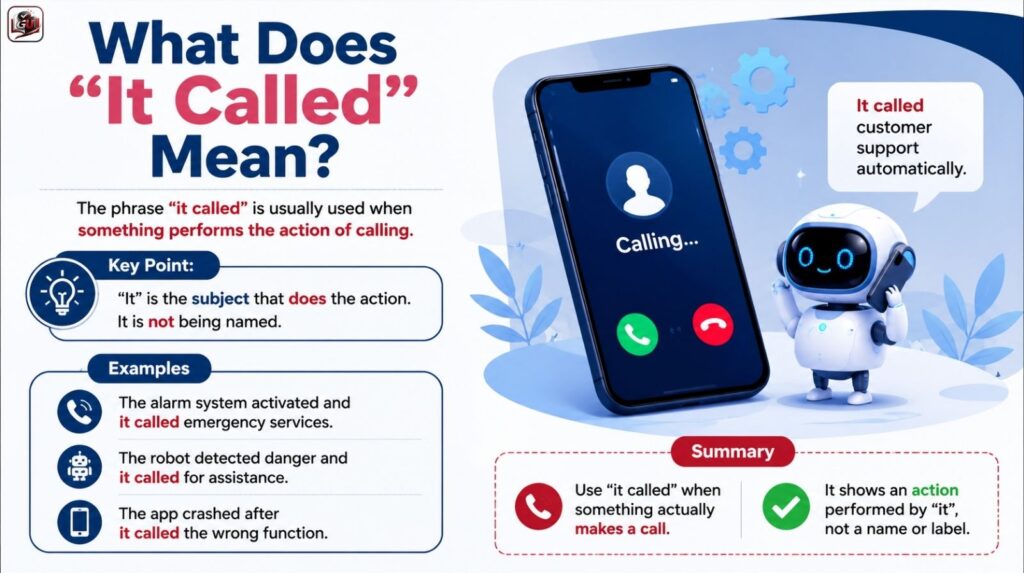
The phrase “it called” is usually incomplete and grammatically incorrect when standing alone.
Consider this sentence:
❌ It called a smartphone.
The sentence sounds wrong because the verb structure is incomplete.
When Can “It Called” Be Correct?
There are rare situations where “it” acts as the subject performing the action of calling.
For example:
- The automated system malfunctioned because it called the wrong number.
- The software detected an issue and it called technical support automatically.
In these cases:
- It = subject
- Called = past tense action verb
Therefore, “it called” can be correct only when something actually performed the action of calling.
Examples of Correct Usage
- The alarm system activated and it called emergency services.
- The robot detected danger and it called for assistance.
- The application crashed after it called the wrong function.
These examples are far less common than “it’s called.”
It’s Called vs It Called: Key Difference Explained
Many learners confuse these phrases because they look similar. However, their grammatical roles are completely different.
| Phrase | Meaning | Grammar Function | Example |
|---|---|---|---|
| It’s Called | Something is named or known as | Passive Voice | It’s called a laptop |
| It Called | Something performed the act of calling | Active Voice | It called customer service |
| It’s Called | Used for definitions | Linking Structure | It’s called gravity |
| It Called | Used for actions | Past-Tense Verb | It called the wrong number |
Quick Rule to Remember
Ask yourself:
Is something being named?
If yes:
✅ Use “it’s called.”
Is something making a phone call or calling someone?
If yes:
✅ Use “it called.”
This simple test works in almost every situation.
Why Do People Confuse “It’s Called” and “It Called”?
English contractions often create confusion.
The contraction “it’s” combines:
- It
- Is
Many learners accidentally omit “is”, creating incorrect sentences.
Common Mistakes
Mistake 1: Dropping the Helping Verb
❌ It called photosynthesis.
✅ It’s called photosynthesis.
Mistake 2: Direct Translation from Another Language
Some languages do not require auxiliary verbs in the same way English does. As a result, learners may unintentionally remove “is.”
Mistake 3: Speaking Quickly
During casual conversation, “it’s called” may sound like:
its-called
This pronunciation can make listeners believe the phrase contains only two words.
How Native Speakers Use It
Native speakers almost always say:
- It’s called SEO.
- It’s called artificial intelligence.
- It’s called customer retention.
Hearing these expressions regularly helps reinforce the correct structure.
Real-Life Example: How a Missing Word Changed a Business Presentation
A marketing trainee preparing a presentation for an international client wanted to explain a new branding strategy. During the presentation, he displayed a slide that read:
“It called brand positioning.”
Several audience members looked confused.
The intended sentence was:
“It’s called brand positioning.”
Although the difference was only one missing word, the sentence became grammatically incorrect. The audience briefly wondered whether something had actually performed the action of calling.
After the meeting, the trainee reviewed feedback and realized that English grammar often depends on auxiliary verbs to create passive constructions.
The correction improved clarity immediately:
- It’s called market segmentation.
- It’s called brand awareness.
- It’s called customer engagement.
This example demonstrates how a tiny grammatical mistake can affect professionalism, especially in business communication. Whether writing emails, reports, blog posts, or presentations, using “it’s called” correctly helps readers understand your meaning instantly.
The lesson is simple: when introducing a name, term, concept, or label, remember to include the helping verb.
Grammar Breakdown: Active Voice vs Passive Voice
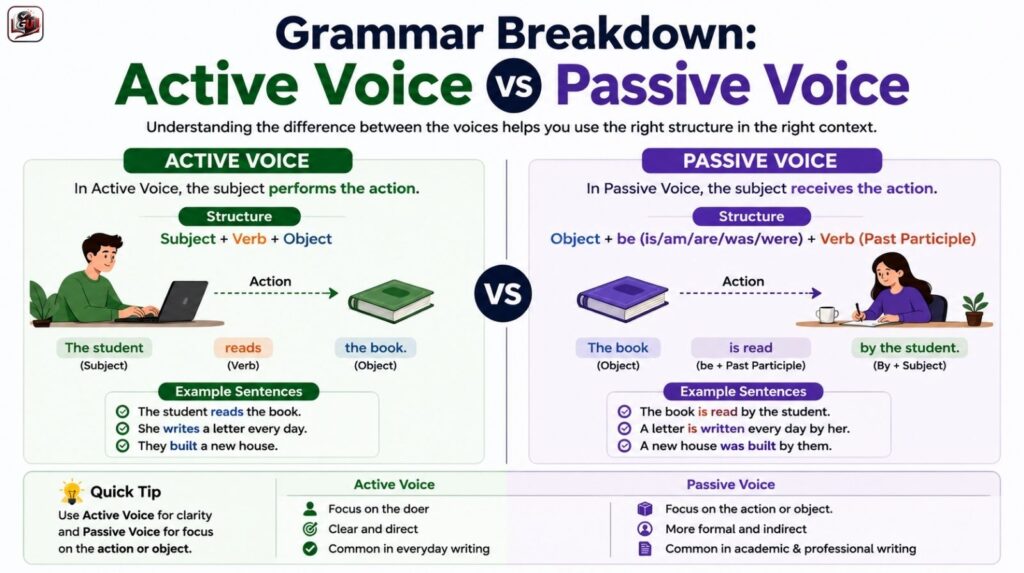
Understanding voice makes this topic much easier.
Active Voice
In active voice, the subject performs the action.
Example:
- The robot called the technician.
Or:
- It called the technician.
Here, it performs the action.
Passive Voice
In passive voice, the subject receives the action.
Example:
- The process is called automation.
Or:
- It’s called automation.
Here, the focus is on the name rather than the action.
Why Passive Voice Matters Here
The phrase “it’s called” belongs to a passive structure because something is being given a name.
Examples:
- It’s called a dictionary.
- It’s called cloud computing.
- It’s called renewable energy.
This pattern is extremely common in educational and professional writing.
Usage Statistics and Language Trends (2025–2026)
Modern language databases continue to show that “it’s called” is vastly more common than “it called.”
According to language corpora and search trend analyses from educational resources and grammar platforms during 2025–2026:
- “It’s called” appears millions of times in published content.
- Grammar-checking tools frequently flag incorrect uses of “it called.”
- Educational websites report that omitted auxiliary verbs remain one of the most common grammar mistakes among English learners.
- Search queries related to grammar comparisons continue growing as more people learn English online.
These trends highlight the importance of mastering basic sentence structures and auxiliary verbs.
Why This Matters for Writers
Correct grammar:
- Improves readability
- Builds credibility
- Enhances professional communication
- Reduces misunderstandings
Even a small correction can significantly improve writing quality.
How to Remember the Correct Phrase
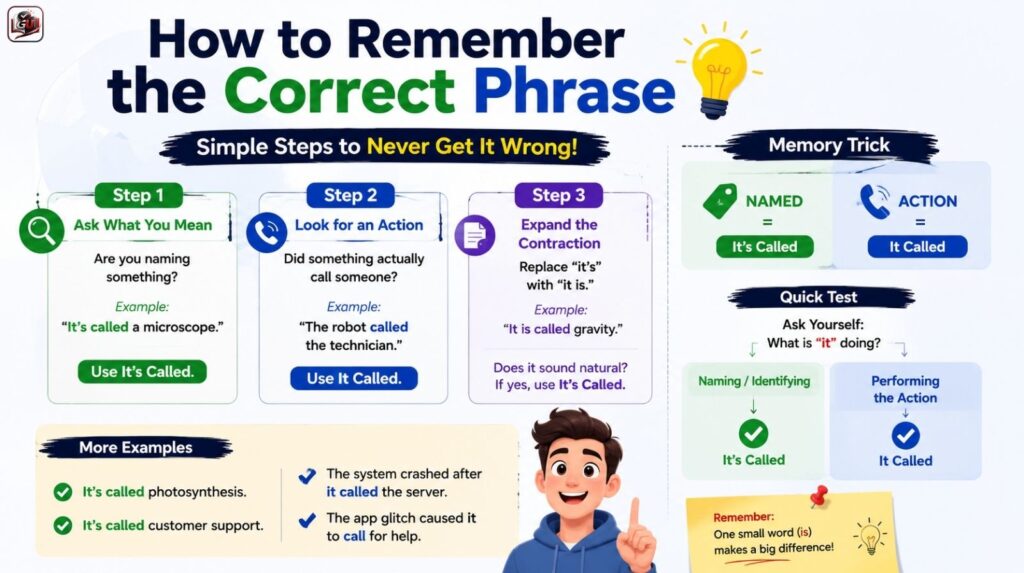
If you often mix up these expressions, use this simple method.
Step 1: Ask What You Mean
Are you naming something?
Example:
- It’s called a microscope.
If yes, use “it’s called.”
Step 2: Look for an Action
Did something actually call someone?
Example:
- The software crashed after it called the server.
If yes, use “it called.”
Step 3: Expand the Contraction
Replace “it’s” with “it is.”
Example:
- It is called gravity.
Does it sound natural?
If yes, “it’s called” is correct.
Memory Trick
Remember:
Named = It’s Called
Action = It Called
This shortcut works in nearly every situation.
FAQs
Is “it called” grammatically correct?
Yes, but only when it performs the action of calling someone or something. In most naming situations, “it’s called” is correct.
Why is “it’s called” more common?
Because people frequently use it to define, identify, and explain concepts, objects, and terms.
Can I say “it called photosynthesis”?
No. The correct sentence is:
It’s called photosynthesis.
What does “it’s” stand for?
“It’s” is a contraction of:
It is
or
It has
In the phrase “it’s called,” it means “it is.”
Is “it’s called” passive voice?
Yes. It is a passive construction because the subject receives a name rather than performing an action.
How do native English speakers use it?
Native speakers commonly say:
- It’s called a laptop.
- It’s called machine learning.
- It’s called digital marketing.
What is the easiest way to remember the difference?
Use this rule:
- Naming something → It’s called
- Performing a call → It called
Credible References
For additional grammar guidance, consult:
- Google Search Central
- HubSpot Blog Grammar Resources
- Merriam-Webster Dictionary
Conclusion
When comparing It’s Called vs It Called, the correct choice depends on what you’re trying to express.
If you are naming, defining, or identifying something, “it’s called” is the correct phrase. This structure uses passive voice and is the form most commonly used in everyday English.
On the other hand, “it called” is only correct when something actually performs the action of calling.
Remember this simple rule:
- Naming something → It’s Called
- Performing an action → It Called
Mastering this distinction will help you write more clearly, communicate more professionally, and avoid one of the most common grammar mistakes in English. The next time you encounter It’s Called vs It Called, you’ll know exactly which phrase to use and why.
👉Keep learning with more easy grammar lessons on GrammerUpdate.com

Noor Fatima is a professional blogger specializing in spelling correction and grammar guidance. She creates clear, practical content to help readers avoid common mistakes, strengthen writing skills, and communicate with confidence in everyday and professional settings.