
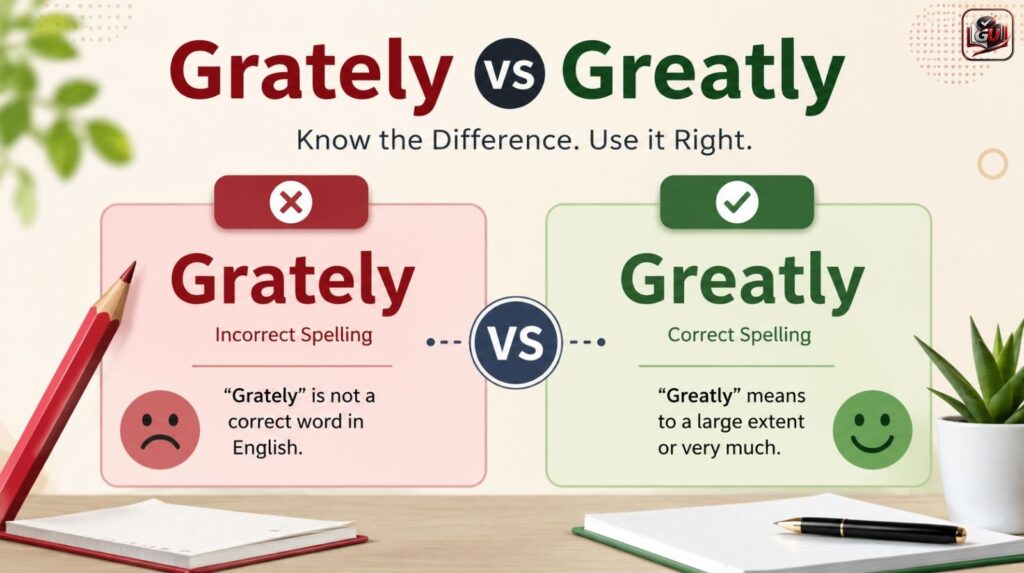
Sometimes, a single extra letter can completely change how your writing looks. That’s exactly what happens with Grately vs Greatly. Many people type “grately” without even realizing it might be incorrect because the word sounds almost identical to “greatly” when spoken out loud. It’s a small mistake, but one that appears surprisingly often in emails, articles, captions, and everyday conversations online.
The confusion usually comes from pronunciation and fast typing, which makes it easy to assume both spellings are acceptable. However, only one of them is actually correct in standard English.
In this guide, you’ll learn the real difference between Grately vs Greatly, when to use “greatly” properly, common mistakes people make, and simple ways to remember the correct spelling in your daily writing.
Copyright vs Copywrite: Differences, Usage, Meaning, And Common Mistakes
What Is the Difference Between Grately and Greatly?
The biggest difference is simple:
- Greatly is a correct English adverb.
- Grately is not considered a standard English word.
Many people accidentally write “grately” because of pronunciation habits or typing errors. However, dictionaries and grammar authorities recognize only “greatly” as the proper spelling.
What Does “Greatly” Mean?
“Greatly” means:
- To a large extent
- Very much
- Significantly
It is commonly used to emphasize importance, appreciation, improvement, or impact.
Examples of “Greatly”
- Your support greatly helped our project.
- She was greatly inspired by the speech.
- The company greatly improved customer service.
Is “Grately” Ever Correct?
No. In modern English grammar and professional writing, “grately” is considered a misspelling.
Spell-check tools, grammar software, and dictionaries flag it as incorrect.
Clutz vs Klutz: Which Spelling Is Correct In English?
Why Do People Confuse Grately and Greatly?
The confusion mainly comes from pronunciation and typing habits. When people speak quickly, “greatly” may sound similar to “grately.”
Common Reasons for the Mistake
Fast Pronunciation
Native and non-native speakers sometimes soften the “t” sound in “greatly,” making it sound like “grately.”
Autocorrect Issues
Some typing tools fail to catch contextual spelling mistakes immediately.
Lack of Grammar Awareness
Many writers have seen the incorrect spelling online and assume it is acceptable.
Why Correct Spelling Matters
Correct spelling affects:
- Professional credibility
- SEO content quality
- Academic performance
- Brand trust
- Reader experience
For example, a blog post containing grammar errors may appear less trustworthy to readers and search engines.
Neighbour vs Neighbor: Which Spelling Is Correct?
How to Use “Greatly” Correctly in Sentences
Understanding sentence structure helps you use “greatly” naturally.
Using Greatly in Everyday Writing
“Greatly” functions as an adverb, meaning it usually modifies:
- Verbs
- Adjectives
- Past participles
Greatly With Verbs
Examples:
- We greatly appreciate your feedback.
- They greatly expanded their business.
- Technology has greatly changed communication.
Greatly With Adjectives
Examples:
- The new design is greatly superior.
- Her confidence became greatly stronger over time.
Greatly in Professional Communication
Business emails often use “greatly” to express appreciation politely.
Examples:
- Your assistance is greatly appreciated.
- We would be greatly honored to work with you.
This phrase is extremely common in customer service and corporate communication.
Verbiage vs Verbage: Which Spelling Is Correct?
Common Grammar Mistakes Related to “Greatly”
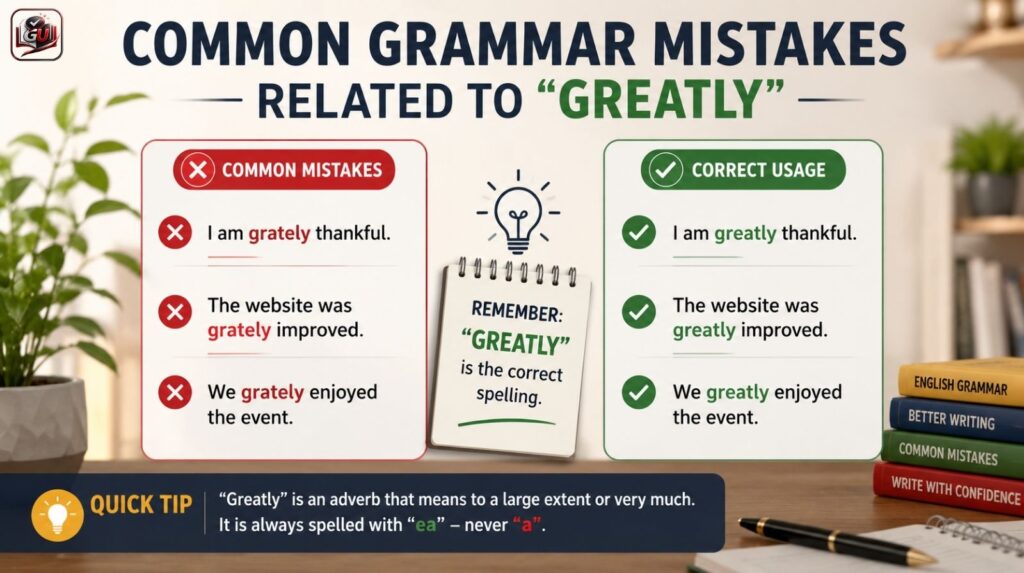
Many writers make additional grammar mistakes when using “greatly.”
Incorrect Examples
❌ I am grately thankful.
❌ The website was grately improved.
❌ We grately enjoyed the event.
Correct Examples
✅ I am greatly thankful.
✅ The website was greatly improved.
✅ We greatly enjoyed the event.
“Greatly Appreciated” vs “Grately Appreciated”
The correct phrase is always:
“greatly appreciated.”
This expression is widely used in:
- Emails
- Customer support
- Formal letters
- Academic communication
Example:
Your quick response is greatly appreciated.
Grately vs Greatly in SEO and Content Writing
Spelling accuracy is extremely important in SEO content writing.
Search engines like Google evaluate content quality using multiple factors, including readability, trustworthiness, and user experience.
Why Grammar Impacts SEO
Poor spelling can:
- Increase bounce rates
- Reduce reader trust
- Hurt brand authority
- Lower engagement
According to recent content quality studies published by HubSpot and SEO experts, users are more likely to trust websites with clean grammar and professional writing.
Keyword Optimization and Correct Spelling
Using the wrong spelling may also affect keyword performance.
For example:
- “greatly appreciated meaning” has real search demand.
- “grately appreciated” mostly appears as a misspelled search query.
Therefore, content creators should always use proper spelling for better SEO results.
2025–2026 Content Quality Trends
Recent SEO trends show that search engines increasingly prioritize:
- Helpful content
- Human readability
- Expertise signals
- Accurate language
AI-powered search systems now detect low-quality or error-filled content more efficiently than before.
According to Google’s Search Quality guidance updates in recent years, accurate and helpful writing improves user trust and long-term rankings.
Inclosed vs Enclosed: Which Spelling Is Correct?
Comparison Table: Grately vs Greatly
| Feature | Grately | Greatly |
|---|---|---|
| Correct English Word | No | Yes |
| Recognized in Dictionaries | No | Yes |
| Part of Speech | None | Adverb |
| Professional Usage | Incorrect | Correct |
| SEO-Friendly | No | Yes |
| Grammar Approved | No | Yes |
This simple comparison makes it easier to remember the correct form.
Seperate vs Separate: Which Spelling Is Correct?
Real-Life Case Study: How a Small Business Improved Credibility With Better Grammar
In 2025, a small online clothing brand struggled with customer trust despite offering quality products. The business owner noticed that website visitors rarely completed purchases, and bounce rates were unusually high.
After reviewing the website content, the marketing team discovered several spelling and grammar mistakes across product descriptions and customer emails. One recurring issue was the repeated use of the incorrect phrase “grately appreciated” instead of “greatly appreciated.”
The company decided to rewrite all major content pages, improve grammar consistency, and update automated customer communication. They also used proofreading tools and hired an editor for final reviews.
Within three months, the business experienced measurable improvements:
- Increased customer engagement
- Lower bounce rates
- Better email response rates
- Improved brand credibility
- Higher conversion rates
Customers specifically mentioned that the website felt “more professional” and “more trustworthy.”
This example demonstrates how even small spelling mistakes can influence audience perception. Correct language usage is not just about grammar rules; it directly impacts user trust and business performance.
Muscle vs Mussel: Which Is The Difference And How To Use Them Correctly?
Easy Tricks to Remember the Correct Spelling
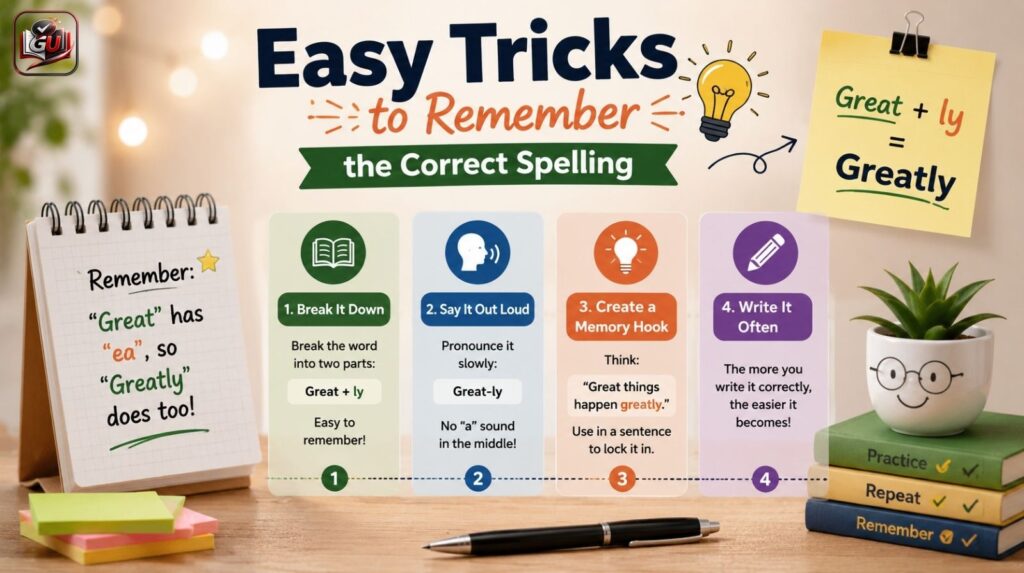
If you often confuse “grately” and “greatly,” these memory tricks can help.
Focus on the Root Word “Great”
The word “greatly” comes from:
Great + ly = Greatly
Since “great” is spelled with “ea,” the adverb keeps the same spelling pattern.
Read the Sentence Out Loud
When proofreading, read slowly instead of quickly. This helps you hear the correct pronunciation more clearly.
Use Grammar Tools
Tools like:
can instantly detect spelling mistakes and improve writing accuracy.
Emigrate vs Immigrate: Difference, Meaning & Usage Explained
When Should You Use “Greatly”?
You should use “greatly” when describing something significant, important, or impactful.
Examples in Different Contexts
Academic Writing
- Climate change has greatly affected agriculture.
Business Communication
- We greatly value our customers.
Personal Communication
- I greatly enjoyed our conversation.
Content Writing
- User experience greatly influences SEO rankings.
Using “greatly” correctly makes your writing sound polished and professional.
Click vs Clique: What’s The Difference And How Do You Use Them Correctly?
FAQs
Q. Is “grately” a real word?
A: No. “Grately” is considered a spelling mistake. The correct word is “greatly.”
Q. What does “greatly” mean?
A: “Greatly” means significantly, very much, or to a large extent.
Q. Why do people type “grately”?
A: Most people type “grately” because of pronunciation habits, typing speed, or spelling confusion.
Q. Is “greatly appreciated” grammatically correct?
A; Yes. “Greatly appreciated” is a correct and widely used English phrase.
Q. Does spelling affect SEO rankings?
A; Indirectly, yes. Poor spelling can reduce readability and trust, which may hurt engagement and SEO performance.
Q. Can spell-check tools detect “grately”?
A: Most modern grammar tools can identify “grately” as incorrect and suggest “greatly.”
Final Thoughts on Grately vs Greatly Differences and Correct Usage
Understanding Grately vs Greatly differences and correct usage is important for anyone who writes emails, blog posts, academic papers, or professional content.
The rule is simple:
- Greatly = Correct
- Grately = Incorrect
Although the mistake is common, using the proper spelling improves readability, professionalism, and credibility. It also helps create stronger SEO-friendly content that readers and search engines trust.
Whether you are a student, blogger, marketer, or business owner, mastering small grammar details like this can greatly improve your communication skills.
Before publishing any content, always proofread carefully and use trusted grammar tools to ensure accuracy. Small corrections often make a great difference.
👉Keep learning with more easy grammar lessons on GrammerUpdate.com

Noor Fatima is a professional blogger specializing in spelling correction and grammar guidance. She creates clear, practical content to help readers avoid common mistakes, strengthen writing skills, and communicate with confidence in everyday and professional settings.