
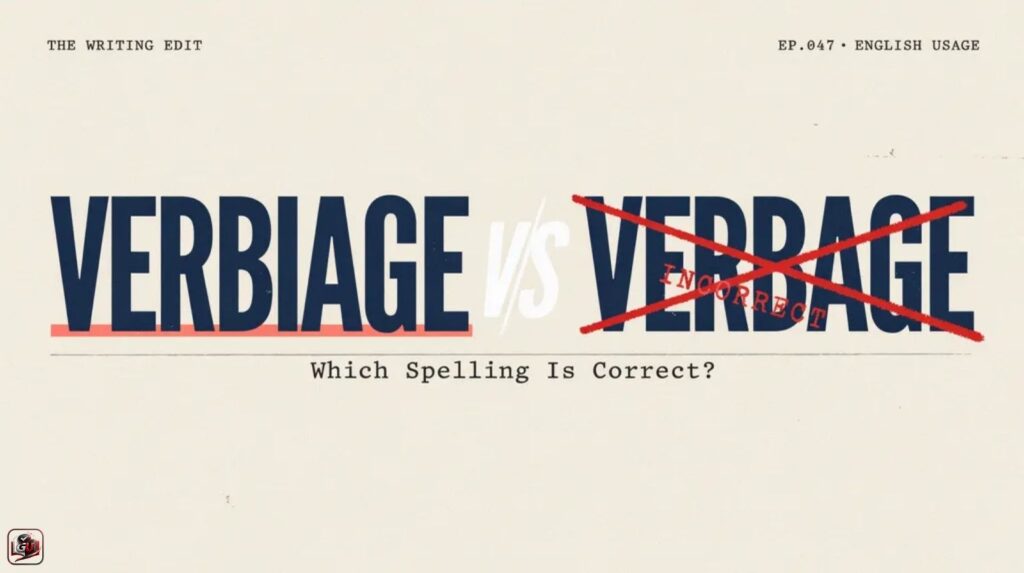
Have you ever typed “verbage” and wondered if it was actually correct? You’re not alone. Many English writers, students, bloggers, and professionals frequently confuse verbiage and verbage because the words sound nearly identical when spoken.
The confusion becomes even greater because you may occasionally see both versions online. However, only one spelling is widely accepted in standard English.
In this guide, you’ll learn the difference between verbiage vs verbage, discover which spelling dictionaries recognize, see real-world examples, and learn how to avoid making this common writing mistake.
By the end, you’ll know exactly when to use verbiage and why verbage is usually considered incorrect.
What Is the Difference Between Verbiage and Verbage?
The difference is simple:
| Word | Correct? | Meaning |
|---|---|---|
| Verbiage | ✅ Yes | Excessive or unnecessary words in speech or writing |
| Verbage | ❌ Usually No | Common misspelling of verbiage |
In modern English, verbiage is the standard and accepted spelling.
Verbage appears occasionally in informal writing, but major dictionaries and style guides generally treat it as a misspelling or nonstandard variant.
Quick Answer
If you’re writing an article, email, report, essay, or professional document, use verbiage.
Why People Get Confused
The ending “-age” sounds natural in English words such as:
- package
- village
- postage
- marriage
As a result, many people mistakenly assume that verbage follows the same pattern.
However, English spelling doesn’t always follow pronunciation.
What Does “Verbiage” Mean?
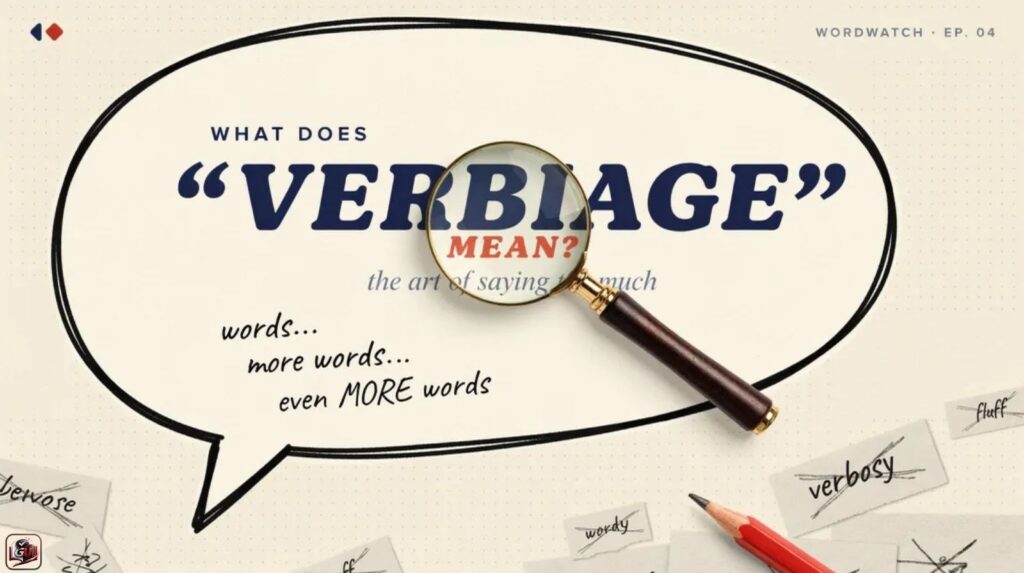
Verbiage refers to the use of more words than necessary.
It often describes writing or speech that is overly wordy, repetitive, or complicated.
Definition of Verbiage
According to standard dictionaries, verbiage means:
An excess of words; wordiness; language that uses more words than necessary.
Examples of Verbiage in Sentences
- The report contained too much verbiage and could have been shorter.
- Good editors remove unnecessary verbiage from articles.
- The contract’s legal verbiage confused many readers.
- Her presentation was informative, but the excessive verbiage reduced clarity.
Is Verbiage Always Negative?
Not always.
Historically, the word simply referred to wording or language. However, modern usage often carries a negative tone because it implies unnecessary complexity.
For example:
Negative:
“The proposal was full of verbiage.”
Neutral:
“The legal verbiage requires careful review.”
Context determines the meaning.
Is “Verbage” a Real Word?
This is where many writers become uncertain.
What Dictionaries Say
Most major dictionaries recognize verbiage as the standard spelling.
Verbage is generally classified as:
- a misspelling
- a nonstandard variant
- an informal alternative
Therefore, professional writers should avoid it whenever possible.
Why Verbage Appears Online
You may still find thousands of examples of verbage on:
- blogs
- forums
- social media
- discussion boards
This happens because spelling mistakes spread easily across the internet.
Just because a word appears frequently online does not mean it is correct.
See Also: Neighbour vs Neighbor: Which Spelling Is Correct?
Should You Ever Use Verbage?
In professional writing, the answer is generally no.
Use verbiage instead.
This ensures your writing aligns with dictionary standards and editorial expectations.
Verbiage vs Verbage: Side-by-Side Comparison
The following comparison highlights the key differences.
| Feature | Verbiage | Verbage |
|---|---|---|
| Dictionary Accepted | Yes | Usually No |
| Standard English | Yes | No |
| Professional Writing | Recommended | Not Recommended |
| Academic Writing | Recommended | Avoid |
| Business Communication | Recommended | Avoid |
| Common Online Usage | Common | Also Common |
| Correct Spelling | ✅ Yes | ❌ No |
Easy Rule to Remember
If you’re unsure, remember:
Verbiage = Correct
Verbage = Mistake
This simple rule will keep your writing accurate.
Why Correct Spelling Matters in Professional Writing
Some people assume spelling differences are minor. However, in professional communication, accuracy influences credibility.
First Impressions Matter
Readers often judge expertise based on writing quality.
A spelling mistake may lead readers to question:
- professionalism
- attention to detail
- subject knowledge
SEO and Content Writing
For bloggers and content creators, correct spelling is particularly important.
Search engines analyze content quality signals, including:
- grammar
- readability
- user experience
While a single typo won’t ruin rankings, consistent errors can reduce trust.
Academic and Business Contexts
Universities and businesses expect standard English usage.
Using verbiage instead of verbage helps maintain professional standards.
Real-Life Example: How a Small Spelling Mistake Affected Content Performance
A content marketing agency conducted an internal review of several blog articles targeting grammar-related keywords.
One article repeatedly used verbage instead of verbiage. Initially, the writer assumed both spellings were acceptable because they appeared frequently in online discussions.
After publication, readers began leaving comments pointing out the error. The article received lower engagement than expected, and several visitors questioned the credibility of the content.
The editorial team later corrected every instance of verbage and replaced it with verbiage. They also updated examples and added references from authoritative dictionaries.
Within the following months, user engagement improved. Bounce rates decreased, and readers spent more time on the page.
Although many factors influence content performance, the case demonstrated an important lesson:
Accuracy builds trust.
See Also: Emigrate vs Immigrate: Difference, Meaning & Usage Explained
When readers see correct spelling, grammar, and usage, they are more likely to view the content as reliable and authoritative.
This example highlights why writers should verify language questions before publishing, especially when creating educational or informational content.
Language Usage Statistics and Trends (2025–2026)
Language tracking tools and search trend platforms continue to show significant interest in spelling-related searches.
Growing Interest in Grammar Searches
Recent search trend analyses indicate that millions of users annually search for:
- correct spelling
- grammar differences
- word usage guides
- commonly confused words
Terms such as:
- affect vs effect
- then vs than
- neighbor vs neighbour
- verbiage vs verbage
continue to attract substantial search volume.
Why These Searches Are Increasing
Several factors contribute to the trend:
- More online writing than ever before.
- Increased use of AI-assisted tools.
- Growth of blogging and content marketing.
- Professional communication occurring digitally.
As a result, understanding correct word forms has become increasingly important for students, professionals, and creators.
How to Remember the Correct Spelling
Fortunately, there’s an easy memory trick.
Focus on the “I”
The correct spelling contains the letter I:
Verb-I-age
Think:
“I want the correct spelling.”
The I helps you remember verbiage.
Associate It with Vocabulary
Many people connect verbiage with language and vocabulary.
Both words relate to communication, making the spelling easier to recall.
Proofread Before Publishing
Always use:
- spell-check tools
- grammar software
- dictionary verification
A quick review can prevent embarrassing mistakes.
Common Mistakes Writers Make
Many writers accidentally misuse these terms.
Mistake #1 – Assuming Both Are Equal
Not all commonly used spellings are correct.
Use verbiage for standard English.
Mistake #2 – Copying Informal Sources
Forums and social media often contain spelling errors.
Verify words using authoritative references.
Mistake #3 – Ignoring Context
Remember that verbiage often implies unnecessary wording.
It doesn’t always simply mean “words.”
Mistake #4 – Overusing Verbiage
Ironically, some writers use the word too frequently.
Clear, concise language usually improves readability.
How to Use Verbiage Correctly in Writing
Follow these simple steps.
Step 1: Identify Unnecessary Words
Review sentences for repetition.
Step 2: Simplify Language
Replace complex phrases with simpler alternatives.
Step 3: Edit for Clarity
Remove filler words and redundant explanations.
Step 4: Use Verbiage Appropriately
Example:
✅ “The contract contains legal verbiage.”
❌ “The contract contains legal verbage.”
Step 5: Verify with a Dictionary
Before publishing, confirm uncertain spellings.
FAQs
Q. Is verbiage or verbage correct?
A: Verbiage is the correct and widely accepted spelling in standard English. Verbage is generally considered a misspelling or nonstandard variant.
Q. What does verbiage mean?
A; Verbiage refers to excessive, unnecessary, or overly complicated wording in speech or writing.
Q. Is verbage in the dictionary?
A: Some dictionaries may mention it as a variant spelling, but verbiage remains the preferred standard form.
Q. Why do people write verbage?
A: The pronunciation of verbiage often leads people to assume the word should be spelled verbage.
Q. Can I use verbage in professional writing?
A: No. Professional, academic, and business writing should use verbiage.
Q. Does verbiage always have a negative meaning?
A: Not always. It can simply refer to wording or language, although it frequently implies unnecessary wordiness.
Q. How can I remember the correct spelling?
A: Remember the phrase:
“The I in verbiage means it’s the correct spelling.”
References
For further verification and language guidance, consult:
- Merriam-Webster Dictionary
- Cambridge Dictionary
- Oxford Learner’s Dictionaries
Conclusion
When comparing Verbiage vs Verbage, the answer is straightforward: verbiage is the correct spelling and the preferred choice in modern English. While verbage occasionally appears online, it is generally viewed as a misspelling or nonstandard variant.
If you’re writing for school, business, blogging, or professional communication, always choose verbiage. Doing so improves clarity, maintains credibility, and ensures your writing follows accepted language standards.
The next time you encounter verbiage vs verbage, you’ll know exactly which spelling to usevand why it matters.
👉Keep learning with more easy grammar lessons on GrammerUpdate.com

Noor Fatima is a professional blogger specializing in spelling correction and grammar guidance. She creates clear, practical content to help readers avoid common mistakes, strengthen writing skills, and communicate with confidence in everyday and professional settings.