
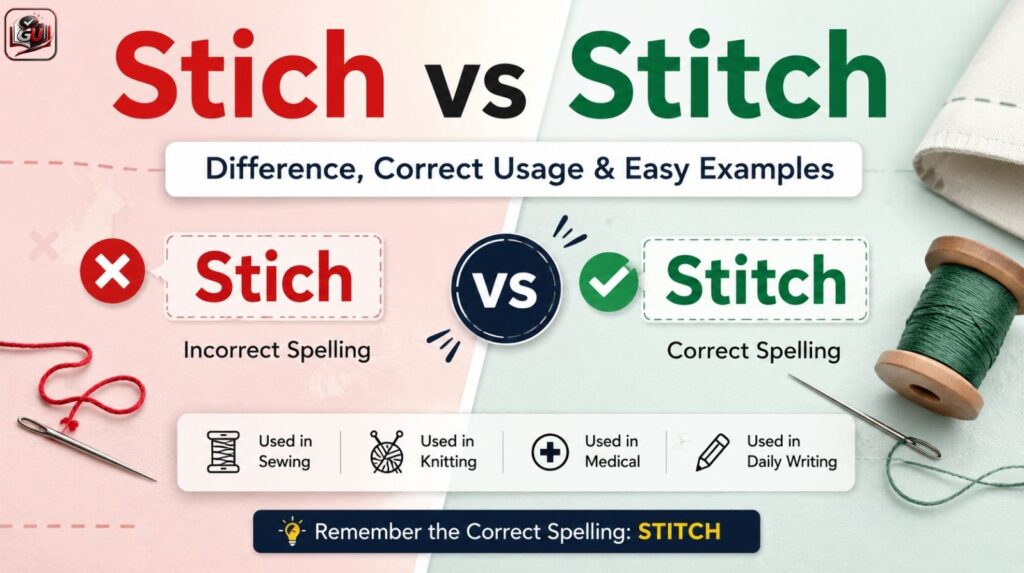
Sometimes a single missing letter can make a word look completely wrong. That is exactly what happens with “stich” and “stitch.” Many people type “stich” by mistake without even noticing, especially while typing fast or relying on autocorrect. Since both words look almost the same, the confusion is very common.
The truth is that only one of these spellings is correct in standard English. Whether you are talking about sewing clothes, medical stitches, knitting, or everyday writing, using the right spelling matters more than you might think.
In this guide, we will break down the real difference between Stich vs Stitch, explain the correct usage with simple examples, and share easy tips that will help you remember the correct spelling without getting confused again.
What Does “Stitch” Mean?
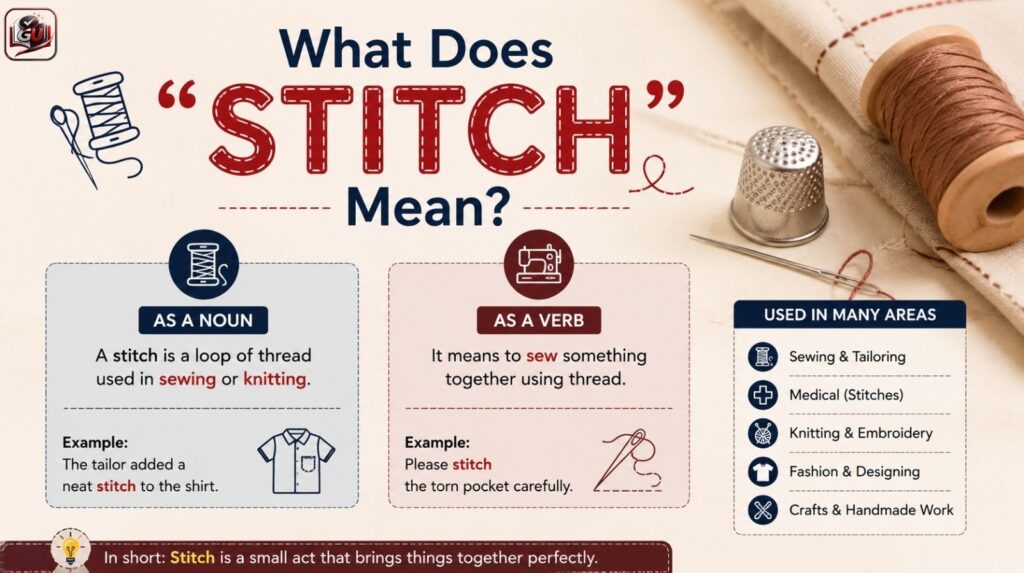
The word “stitch” is the correct spelling in English. It can be used both as a noun and a verb.
As a Noun
A stitch refers to a loop of thread used in sewing or knitting.
Example:
- The tailor added a neat stitch to the shirt.
- One loose stitch ruined the design.
As a Verb
It means to sew something together using thread.
Example:
- My grandmother can stitch beautiful dresses.
- Please stitch the torn pocket carefully.
The word is commonly used in:
- Sewing
- Fashion
- Embroidery
- Medical procedures
- Knitting and crafting
Because it is widely used, many people accidentally misspell it as “stich.”
Is “Stich” a Real Word?
In most English writing, “stich” is considered incorrect. It is simply a misspelling of “stitch.”
However, there is one exception.
“Stich” as a Proper Name
“Stich” can sometimes appear as:
- A surname
- A brand name
- A fictional character name in rare cases
Still, in standard English grammar and spelling, the correct word is stitch.
Quick Answer
| Word | Correct or Incorrect | Meaning |
|---|---|---|
| Stitch | Correct | Sewing or joining with thread |
| Stich | Incorrect in normal English | Usually a spelling mistake |
Why Do People Confuse Stich vs Stitch?
English spelling mistakes often happen because words sound similar when spoken aloud. The same thing happens with stich vs stitch.
Missing the “T”
The most common reason is that people accidentally forget the second “t.”
Incorrect:
- I need to stich this cloth.
Correct:
- I need to stitch this cloth.
Fast Typing Errors
When typing quickly on phones or keyboards, letters are often skipped.
Pronunciation Confusion
Some people pronounce “stitch” softly, making it sound closer to “stich.”
Autocorrect Problems
Interestingly, some devices fail to correct the mistake immediately, especially in informal writing.
Therefore, many users continue using the wrong spelling without noticing.
Stich vs Stitch Difference Explained Clearly
Understanding the difference is actually simple once you break it down.
Correct Word: Stitch
“Stitch” follows standard English spelling rules and appears in dictionaries worldwide.
Example Sentences
- She learned how to stitch by hand.
- The doctor used stitches to close the wound.
- This sweater has decorative stitching.
Incorrect Word: Stich
“Stich” does not function as a proper English word in normal communication.
Incorrect Examples
- She can stich clothes.
- The pillow needs a stich.
Both examples should use “stitch.”
How to Remember the Correct Spelling Easily
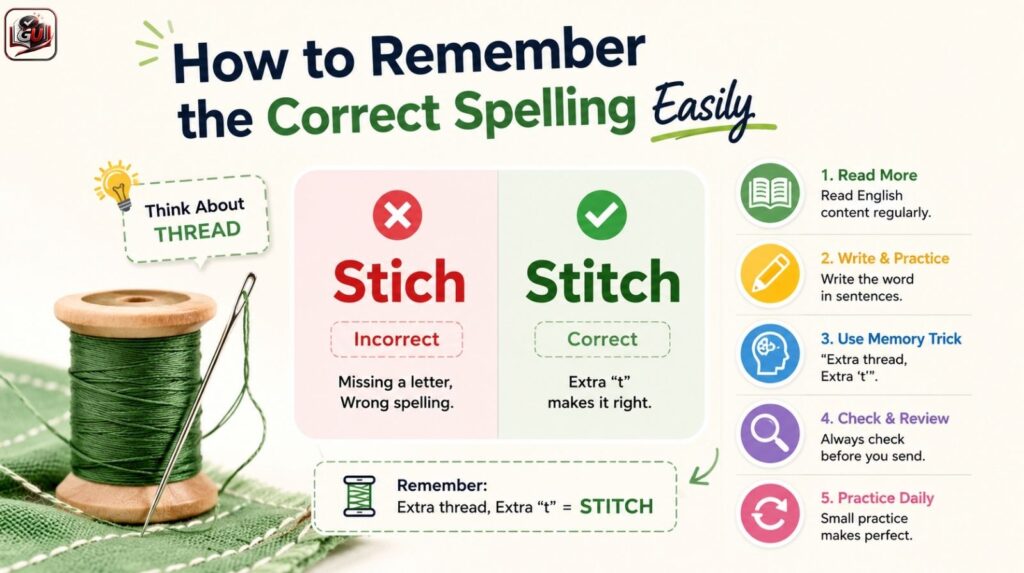
One of the easiest ways to avoid spelling mistakes is to create a memory trick.
Think About “Thread”
The word stitch has:
- “t”
- “ch”
These letters help remind you of thread and cloth, which are related to sewing.
Memory Trick
“You need extra thread for a stitch.”
The extra “t” in “stitch” can remind you of thread.
Practice with Common Sentences
Writing the word repeatedly helps your brain remember the correct spelling.
Practice Examples
- I can stitch my own clothes.
- This stitch looks perfect.
- She stitched the fabric carefully.
Real-Life Example: How a Small Spelling Mistake Hurt an Online Store
In 2025, a small handmade clothing business started publishing blog content to attract customers through search engines. The owner wrote several articles about sewing tutorials and embroidery techniques. However, there was one major issue throughout the website: the word “stitch” was repeatedly written as “stich.”
At first, the mistake seemed harmless. The website still looked professional, and the products were high quality. However, after a few months, the owner noticed that blog posts were not ranking well on search engines.
An SEO audit later revealed the problem. Most users searched for:
- “how to stitch clothes”
- “basic stitching techniques”
- “hand stitch tutorial”
But the website had used “stich” instead of “stitch” in titles, headings, and product descriptions.
Because of this spelling error:
- Search visibility dropped
- Click-through rates decreased
- User trust weakened
- Bounce rate increased
After correcting the spelling across all pages, the website traffic improved significantly within three months.
This example shows how even a small spelling mistake can affect:
- SEO performance
- Reader trust
- Professional credibility
Therefore, using the correct spelling matters more than many people realize.
Common Situations Where “Stitch” Is Used
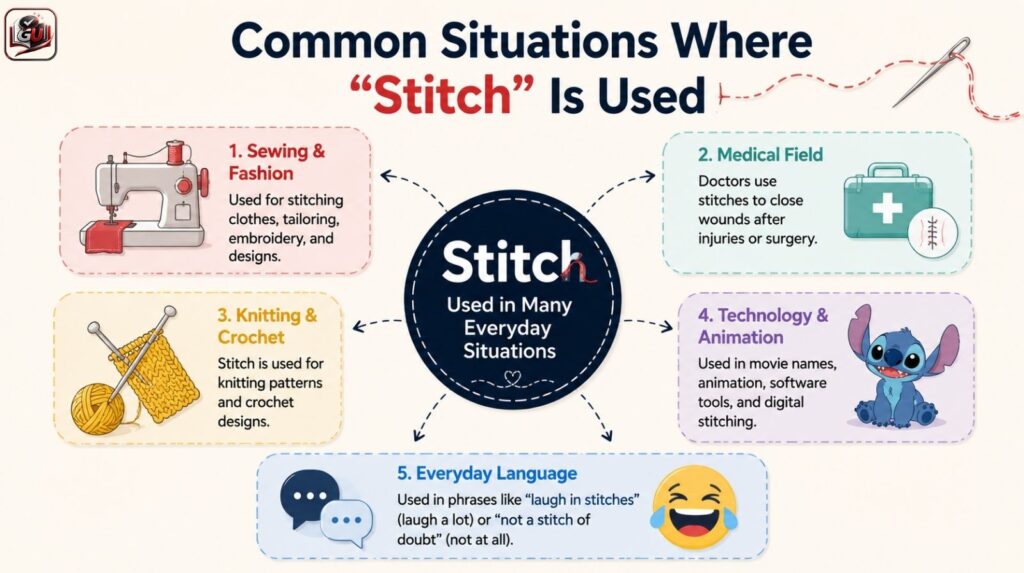
The word “stitch” appears in many everyday situations.
Sewing and Fashion
This is the most common use.
Examples
- Cross-stitch
- Stitch design
- Stitch pattern
Medical Field
Doctors also use stitches to close wounds.
Example
- The patient received five stitches after the accident.
Technology and Animation
Many people know the character “Stitch” from Disney’s movie:
Lilo & Stitch
In this case, “Stitch” is a character name, not a sewing term.
Knitting and Embroidery
The term is also popular in crafting communities worldwide.
2025–2026 Spelling Data and Trends
Recent language and search trend reports show that spelling-related searches continue growing rapidly.
According to Google Trends, spelling confusion searches increased significantly between 2024 and 2026, especially for commonly mistyped English words.
Research published by HubSpot also shows that readers trust content less when they notice obvious spelling mistakes. Even small errors can lower engagement and credibility.
Additionally, grammar tools like Grammarly report that spelling mistakes remain one of the most common writing issues among students, bloggers, and professionals.
These trends highlight why learning correct spellings such as “stitch” is important for both communication and SEO.
Common Mistakes People Make
Here are some frequent errors related to this spelling confusion.
Using “Stich” in Professional Writing
Incorrect spelling in:
- Blog posts
- Emails
- Assignments
- Product descriptions
can make writing appear less trustworthy.
Confusing Stitch with Similar Words
Some users mix “stitch” with:
- stick
- switch
- stitchh
- stich
Ignoring Spell Check Warnings
Many people type too quickly and skip proofreading.
Therefore, always review important writing carefully.
Step-by-Step Guide to Avoid This Mistake
Step 1: Learn the Correct Form
Always remember:
- Stitch = correct
- Stich = incorrect
Step 2: Read More English Content
Seeing the correct spelling repeatedly improves memory naturally.
Step 3: Use Writing Tools
Grammar tools can catch spelling errors quickly.
Step 4: Practice Daily
Write short practice sentences using “stitch.”
Step 5: Slow Down While Typing
Fast typing increases spelling mistakes.
Stich vs Stitch in SEO Writing
Spelling matters greatly in SEO content.
Search engines prioritize:
- Quality writing
- Correct spelling
- User trust
- Readability
If a website repeatedly uses incorrect spellings like “stich,” it may:
- Lose ranking opportunities
- Reduce reader confidence
- Lower click-through rates
However, intentionally mentioning common misspellings inside helpful educational content can still attract traffic from users searching incorrectly.
That is why many educational blogs discuss “stich vs stitch” while still emphasizing the correct spelling.
FAQs
Q. Is “stich” ever correct?
A: In standard English writing, no. “Stich” is usually a misspelling of “stitch.”
Q. What does “stitch” mean?
A: It means sewing with thread or a loop of thread used in sewing and knitting.
Q. Why do people spell stitch as stich?
A: Mostly because of typing mistakes, pronunciation confusion, or forgetting the second “t.”
Q. How can I remember the spelling of stitch?
A: Use this trick:
“A stitch needs extra thread.”
The extra “t” reminds you of thread.
Q. Is stitch used in medical terms?
A: Yes. Doctors use stitches to close wounds after injuries or surgeries.
Q. Is “Stitch” a Disney character?
A: Yes. Stitch is a famous character from Lilo & Stitch.
Q. Does spelling affect SEO rankings?
A: Yes. Frequent spelling mistakes can reduce trust, readability, and search performance.
Conclusion
Understanding the difference between Stich vs Stitch is simple once you know the correct spelling rules. The word “stitch” is the proper English spelling used for sewing, knitting, medical stitches, and many other contexts. Meanwhile, “stich” is usually just a common typo.
Although the mistake seems small, correct spelling matters for:
- Clear communication
- Professional writing
- SEO performance
- Reader trust
The next time you write the word, remember:
“A stitch needs extra thread.”
That little extra “t” makes all the difference.
If you found this guide helpful, share it with others who often confuse common English spellings and continue improving your writing skills every day.
👉Keep learning with more easy grammar lessons on GrammerUpdate.com

Noor Fatima is a professional blogger specializing in spelling correction and grammar guidance. She creates clear, practical content to help readers avoid common mistakes, strengthen writing skills, and communicate with confidence in everyday and professional settings.