
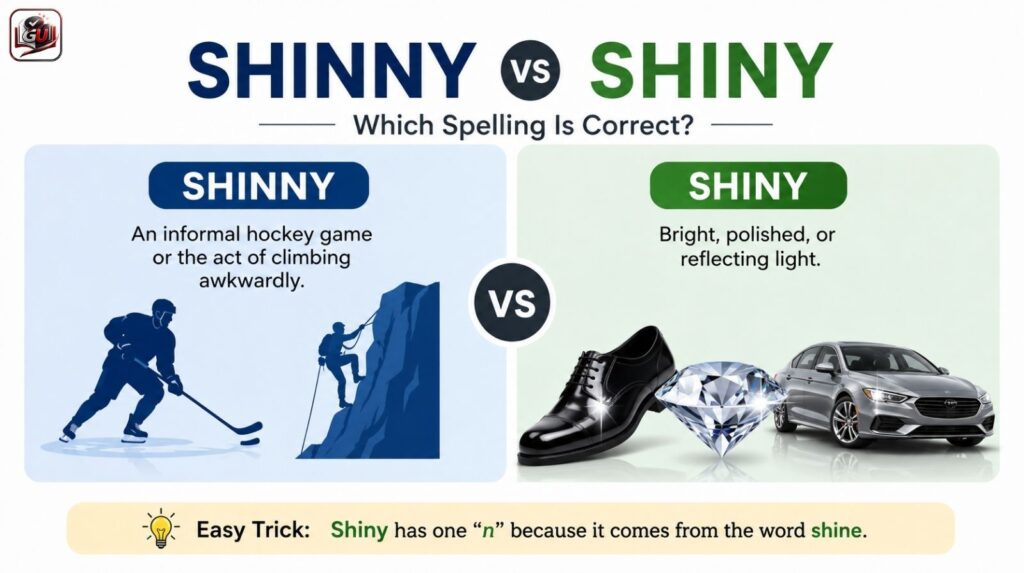
Have you ever caught yourself writing “shinny shoes” and then paused for a second, unsure if it actually looks right? It’s a small spelling detail, but it creates a big moment of confusion for many English learners and even native speakers.
The truth is, shinny and shiny are not the same word at all even though they look almost identical. One is the correct everyday word used to describe something bright, polished, and reflecting light, while the other belongs to a completely different and much rarer context.
In this guide, we’ll break down the real difference between shinny vs shiny in a simple, clear, and practical way. You’ll learn what each word means, where they are used, and how to easily remember the correct spelling so you never mix them up again.
What Is the Difference Between Shinny and Shiny?
The main difference is simple:
| Word | Meaning | Common Usage |
|---|---|---|
| Shiny | Something bright, polished, or reflecting light | Very common |
| Shinny | A type of informal hockey game or the act of climbing awkwardly | Rare |
Most of the time, people actually mean shiny when they accidentally write shinny.
For example:
- ✅ Her shoes looked shiny after polishing.
- ❌ Her shoes looked shinny after polishing.
The second sentence is incorrect because shinny does not describe brightness or gloss.
Why People Confuse Shinny and Shiny
English spelling mistakes often happen because words sound similar. In fast typing or casual writing, adding an extra “n” is a common error.
Similar Pronunciation Causes Confusion
Although the words are pronounced slightly differently, many people do not notice the distinction in everyday speech.
- Shiny → “SHY-nee”
- Shinny → “SHIN-ee”
Because of this, autocorrect errors and typing habits can create confusion.
Visual Similarity in Writing
The two words differ by only one letter:
- shiny
- shinny
Therefore, the brain can easily overlook the extra “n,” especially while writing quickly on phones or laptops.
Influence of Informal English
Social media, texting, and casual online conversations often spread spelling mistakes. As a result, incorrect spellings become more visible online, making learners unsure about the correct form.
What Does “Shiny” Mean?
Definition of Shiny
The word shiny describes something that reflects light or looks bright, polished, or glossy.
It is an adjective commonly used in daily English.
Common Examples of Shiny
Here are some natural examples:
- The car looked shiny after the wash.
- She wore a shiny silver dress.
- His new phone has a shiny screen.
- The diamond appeared incredibly shiny under the lights.
Common Situations Where “Shiny” Is Used
1. Objects and Surfaces
People often use shiny for metal, glass, jewelry, shoes, and electronics.
Examples:
- shiny shoes
- shiny hair
- shiny car
- shiny gold ring
2. Beauty and Fashion
Beauty brands frequently use the word to describe healthy hair, glowing makeup, or polished nails.
3. Technology and Marketing
Companies also use “shiny” metaphorically to describe new or attractive products.
For example:
“Everyone wants the newest shiny gadget.”
What Does “Shinny” Mean?
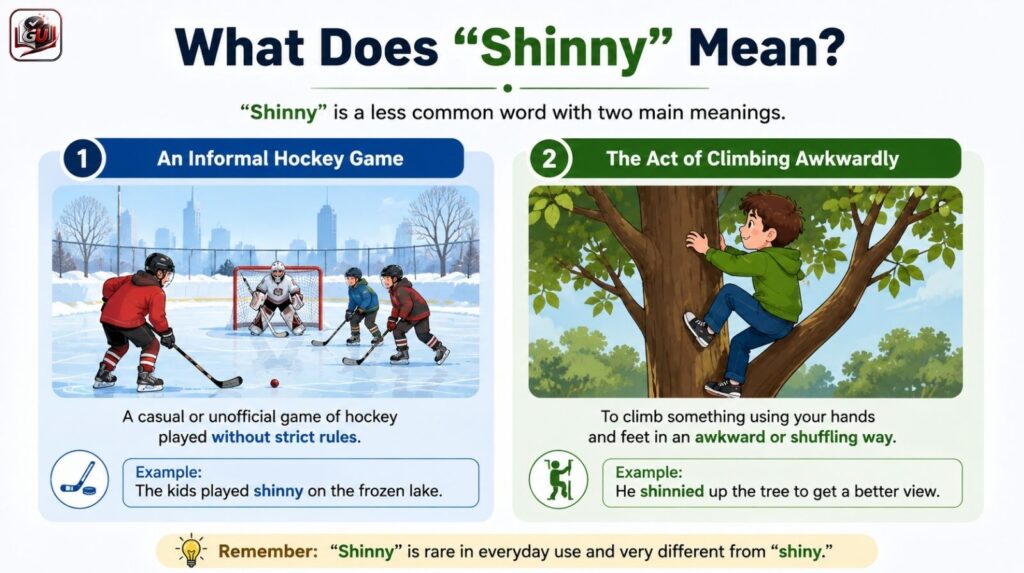
Unlike shiny, the word shinny is far less common.
Definition of Shinny
Shinny refers to:
- An informal version of hockey played without strict rules
- Climbing awkwardly using hands and legs
Examples of Shinny
- The kids played shinny on the frozen pond.
- He shinnied up the tree quickly.
Why Most Writers Rarely Use “Shinny”
Outside sports contexts, most people almost never need this word. That is why using “shinny” instead of “shiny” is usually considered a spelling mistake.
Shinny vs Shiny: Quick Comparison Guide
Meaning Comparison
| Feature | Shiny | Shinny |
|---|---|---|
| Part of Speech | Adjective | Noun / Verb |
| Main Meaning | Bright or reflective | Informal hockey / climbing |
| Common in Daily English | Yes | Rare |
| Often Confused? | Yes | Yes |
| Correct for Bright Objects? | Yes | No |
Easy Memory Trick
A simple trick can help you remember forever:
- Shiny → Think of “shine”
- Shinny → Think of “shin” or hockey
If something glows or reflects light, the correct word is always shiny.
Real-Life Example: How One Small Spelling Error Changed a Product Listing
In 2025, a small online fashion store updated hundreds of product descriptions for a seasonal shoe collection. The marketing team intended to describe the shoes as “shiny black leather boots.” However, due to a spelling oversight, several listings used the word “shinny” instead.
At first, the mistake seemed harmless. However, within a few weeks, the store noticed a drop in search visibility for those products. According to the company’s internal SEO review, customers searching for terms like “shiny boots” or “shiny leather shoes” were not finding those pages as often as expected.
The issue became clearer after keyword analysis. Search engines recognized “shiny” as the standard descriptive term users commonly search for. Meanwhile, “shinny” had almost no commercial search demand because it relates mostly to hockey.
After correcting the spelling from “shinny” to “shiny,” the pages gradually regained traffic over the following month. The brand also reported higher click-through rates because the corrected wording looked more professional and trustworthy.
This example shows how even a small spelling mistake can affect readability, SEO performance, and customer confidence online. Therefore, using the correct spelling matters more than many writers realize.
2025–2026 Language and Search Trends About Spelling Mistakes
Spelling-related searches continue to grow worldwide as more users rely on search engines and AI writing tools for communication.
Recent language trend reports show:
- Google searches for “correct spelling” queries remain highly popular in 2025.
- Confusing word pairs generate millions of monthly searches globally.
- Grammar-checking tools are increasingly used by students, bloggers, and businesses.
- SEO experts now prioritize spelling accuracy because search engines evaluate content quality more carefully.
According to recent guidance from Google Search Central, high-quality content should demonstrate clarity, accuracy, and trustworthiness. Similarly, writing experts at HubSpot emphasize that spelling mistakes can reduce reader trust and engagement.
Additionally, educational resources from Merriam-Webster confirm that “shiny” is the standard adjective for describing something bright or glossy.
These trends highlight why understanding confusing spellings like shinny vs shiny is useful for writers, students, bloggers, and businesses alike.
How to Always Remember the Correct Spelling
Focus on the Root Word
The word shiny comes from the verb “shine.”
Examples:
- shine
- shining
- shiny
This connection makes it easier to remember.
Use Word Association
Imagine a shiny object reflecting sunlight. The visual image helps lock the correct spelling into memory.
Read More Frequently
Reading professionally written articles, books, and websites naturally improves spelling recognition over time.
Use Writing Tools Carefully
Spell-checkers help, but they are not perfect. Sometimes tools fail because shinny is technically a real word.
Therefore, always reread your sentences for meaning.
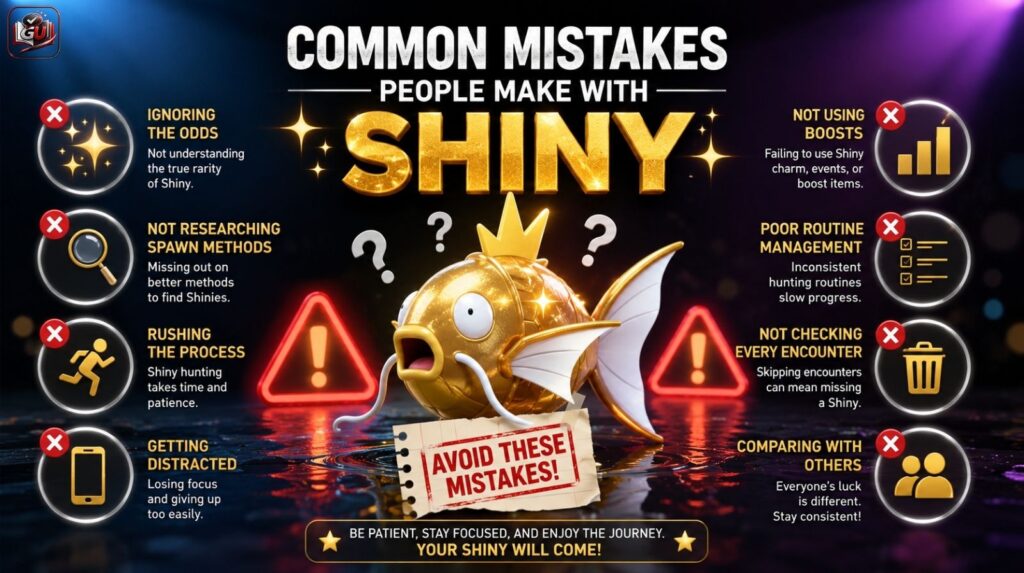
Common Mistakes People Make With Shiny
Using Double “N” Accidentally
The most common error is:
- ❌ shinny car
- ✅ shiny car
Mixing Up Pronunciation
Some learners incorrectly pronounce shiny as “shin-ee” instead of “shy-nee.”
Confusing Context
Remember:
- If you talk about brightness → use shiny
- If you talk about hockey → use shinny
Examples of Correct Usage in Sentences
Sentences With “Shiny”
- The floor looked shiny after cleaning.
- She bought shiny earrings for the party.
- His hair appeared shiny and healthy.
- The trophy was shiny and gold.
Sentences With “Shinny”
- The children played shinny during winter.
- He shinnied over the fence to grab the ball.
How Search Engines Understand Spelling Accuracy
Search engines have become smarter in recent years. Modern algorithms can recognize spelling intent, user behavior, and content quality signals.
Why Correct Spelling Matters for SEO
Correct spelling helps:
- Improve readability
- Increase trustworthiness
- Match search intent
- Boost keyword relevance
- Enhance user experience
For example, people search for:
- shiny objects
- shiny hair
- shiny shoes
Very few users search for “shinny” unless discussing hockey.
Therefore, writers and bloggers should always prioritize the correct keyword spelling in titles, headings, and content.
Google’s Focus on Helpful Content
Google’s helpful content systems reward articles that provide accurate, user-focused information. Clean grammar and correct spelling contribute to overall content quality.
FAQs
Q. Is “shinny” a real word?
A: Yes, but it is uncommon. It usually refers to informal hockey or climbing awkwardly.
Q. Which spelling is correct for something bright?
A: The correct spelling is shiny.
Q. Why do people type “shinny” instead of “shiny”?
A: Usually because of typing mistakes, pronunciation confusion, or autocorrect errors.
Q. Is “shiny” an adjective?
A: Yes. It describes something bright, polished, or reflective.
Q. Can “shinny” describe shoes or jewelry?
A: No. For bright shoes or jewelry, the correct word is always shiny.
Q. How can I remember the difference easily?
A: Think of the word “shine.” If it shines, it is shiny.
Q. Is “shinny” commonly used today?
A: Not really. Outside hockey-related discussions, it is rarely used in modern everyday English.
Conclusion
Understanding the difference between shinny vs shiny is easier once you know their meanings and usage.
In almost every everyday situation, shiny is the correct spelling when describing something bright, polished, or reflective. Meanwhile, shinny is a rare word mostly connected to hockey or climbing.
Although the words look similar, using the correct one improves your writing clarity, professionalism, and SEO performance. Therefore, the next time you describe shiny hair, shiny shoes, or a shiny car, you will know exactly which spelling to choose.
If you found this guide helpful, consider sharing it with others who often confuse English spellings and grammar usage.
👉Keep learning with more easy grammar lessons on GrammerUpdate.com

Noor Fatima is a professional blogger specializing in spelling correction and grammar guidance. She creates clear, practical content to help readers avoid common mistakes, strengthen writing skills, and communicate with confidence in everyday and professional settings.