
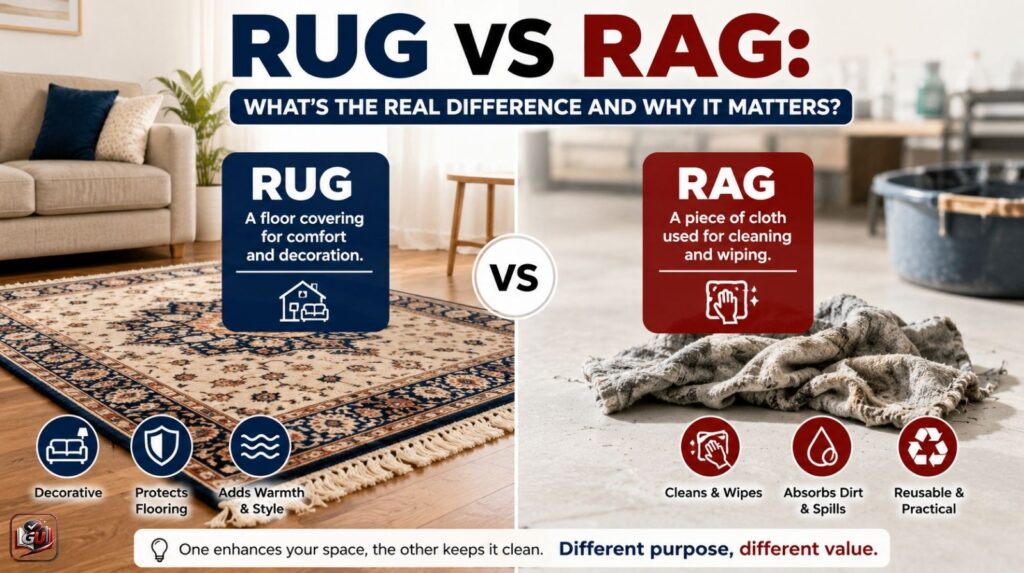
Mixing up rug vs rag might look like a small spelling mistake, but in real-life communication, it can completely change the meaning of your sentence. Imagine asking someone to “clean the floor with a rug” instead of removing dirt, you’ve accidentally suggested using a decorative carpet!
This tiny confusion between two similar-looking words is more common than you think. Many English learners, writers, and even native speakers mix up rug vs rag because they sound almost identical but serve totally different purposes.
A rug is something you place on the floor to enhance comfort and style, while a rag is an old cloth used for cleaning and wiping messes. Simple, right? Yet this small difference often leads to funny mistakes and unclear communication.
In this guide, we’ll break down everything about rug vs rag with real examples, simple explanations, and memory tricks so you never confuse them again in writing or conversation.
Rug vs Rag – Basic Definitions and Core Differences
What is a Rug?
A rug is a piece of thick fabric or textile used mainly for covering part of a floor. Rugs are often used for decoration, warmth, or comfort.
Examples:
- Living room rugs
- Persian rugs
- Area rugs in bedrooms
Rugs are usually designed with patterns, colors, and textures that enhance interior aesthetics.
What is a Rag?
A rag is a small piece of old cloth used for cleaning, wiping, or polishing surfaces. It is typically worn-out fabric that is no longer usable as clothing or decoration.
Examples:
- Cleaning rags for dusting furniture
- Kitchen rags for wiping spills
- Industrial rags for machinery cleaning
Key Difference in One Line
A rug is for decoration and comfort, while a rag is for cleaning and maintenance.
Rug vs Rag in Real-Life Usage Examples
Everyday Household Usage
In homes, rugs are placed in living rooms, hallways, and bedrooms to enhance appearance and comfort. Rags, on the other hand, are found in kitchens, garages, and cleaning supplies.
For example:
- You might buy a soft wool rug for your living room.
- You might use an old cotton shirt as a cleaning rag.
Industrial and Commercial Usage
In industries, rags are essential for cleaning oil, dust, and machinery parts. Rugs are used in offices, hotels, and luxury spaces for aesthetic appeal.
Language and Writing Context
In English writing, confusing rug vs rag can lead to misunderstandings. For instance:
- Incorrect: “Use a rug to clean the table.”
- Correct: “Use a rag to clean the table.”
Why People Confuse Rug vs Rag (Linguistic Insight)
Similar Sound Effect
Both words sound almost identical, especially in fast speech. This phonetic similarity leads to confusion among learners.
Spelling Pattern Confusion
The only difference is one vowel:
- Rug → “u”
- Rag → “a”
This small difference often causes spelling mistakes.
Language Learning Challenges
According to research from Cambridge English (2025), learners commonly confuse short vowel-based words when learning English as a second language. Words like “rug/rag,” “bat/bet,” and “ship/sheep” are frequent confusion pairs.
Rug vs Rag – Comparison Table for Easy Understanding
| Feature | Rug | Rag |
|---|---|---|
| Purpose | Decoration, comfort | Cleaning, wiping |
| Material | Wool, cotton, synthetic | Old cloth, torn fabric |
| Usage Area | Living rooms, bedrooms | Kitchens, workshops |
| Durability | Long-lasting | Short-term use |
| Appearance | Decorative, designed | Plain, worn-out |
This simple comparison makes the difference between rug vs rag very clear.
Real-Life Case Study – How Misunderstanding Rug vs Rag Created Confusion
A small cleaning company in Lahore once faced a communication issue due to the confusion between rug vs rag.
The company received an order from a hotel asking for “20 new rags for room cleaning.” However, a junior staff member misread the request and delivered decorative rugs instead of cleaning cloths.
This mistake caused delays in hotel housekeeping operations. The hotel staff had to manually correct the issue, and the company had to replace the items urgently.
The incident highlighted how a small spelling or word confusion can lead to real operational problems. After this, the company introduced a training session focusing on commonly confused English words like rug vs rag, cloth vs clothes, and towel vs tile.
This real-life example shows how important accurate vocabulary understanding is in professional environments.
Data & Language Trends (2024–2026 Insights)
Common English Confusion Words Study
According to a 2025 report by Oxford Language Research Center, over 38% of ESL (English as Second Language) learners struggle with similar-sounding words like rug vs rag.
Digital Search Trends
Google Trends data (2024–2026) shows:
- “rug meaning” searches increased by 21%
- “rag meaning” searches increased by 34%
- “difference between rug and rag” is a rising long-tail keyword in education blogs
Educational Impact
A 2026 Grammarly Linguistic Report found that vocabulary confusion is one of the top 5 writing errors in digital communication, especially in informal writing and social media content.
How to Remember the Difference Between Rug vs Rag
Simple Memory Trick
- RUG = Room decoration (U = Under your feet)
- RAG = Rough cloth for cleaning (A = Away dirt)
Visual Association Method
Imagine:
- A beautiful rug under a sofa
- A dirty rag wiping a table
This mental image helps reinforce memory.
Practice Sentences
- The rug in the living room is very soft.
- Please clean the table with a rag.
Common Mistakes People Make with Rug vs Rag
Writing Errors
Many writers mistakenly interchange these words in instructions, leading to confusion in meaning.
Pronunciation-Based Mistakes
Fast speech often blurs the vowel sound, causing incorrect spelling in writing.
Typing Autocorrect Issues
Modern keyboards sometimes auto-correct “rag” to “rug” or vice versa depending on context.
Expert Tips to Avoid Confusion
- Always check context before using the word
- Associate “rug” with home decor
- Associate “rag” with cleaning tasks
- Practice writing sentences regularly
- Use grammar tools for proofreading
FAQs
Q. What is the main difference between rug and rag?
A: A rug is used for floor decoration, while a rag is used for cleaning purposes.
Q. Is rug a cloth?
A: Yes, a rug is a type of thick fabric used for flooring and decoration.
Q. What is a rag made of?
A: A rag is usually made from old or discarded cloth materials.
Q. Can rug be used for cleaning?
A: No, rugs are not designed for cleaning purposes.
Q. Why do people confuse rug vs rag?
A: Because both words sound similar and differ by only one vowel.
Q. Is rag still useful after being old cloth?
A: Yes, old cloth becomes useful as cleaning material (rag).
Q. Which word is more commonly used in homes?
A: Both are common, but in different contexts rug for decor and rag for cleaning.
Conclusion
The confusion between rug vs rag is simple but important to understand. While one refers to a decorative floor covering, the other is a practical cleaning cloth. Recognizing the difference improves communication, writing accuracy, and vocabulary confidence.
If you are a student, writer, or English learner, mastering such commonly confused words will significantly improve your language skills.
Keep practicing, and next time you see rug vs rag, you’ll instantly know the difference.
👉 Want more grammar clarity guides like this? Keep learning and exploring to strengthen your English vocabulary every day.
👉Keep learning with more easy grammar lessons on GrammerUpdate.com

Noor Fatima is a professional blogger specializing in spelling correction and grammar guidance. She creates clear, practical content to help readers avoid common mistakes, strengthen writing skills, and communicate with confidence in everyday and professional settings.