
Have you ever written Nieve and then stopped for a second, wondering if it actually looks right? It happens more often than you might think. Many people get confused between Naive vs Nieve because both spellings seem possible at first glance. One sounds right, while the other looks like it could be correct, which is why so many writers make this mistake.
The truth is, only one spelling is correct in standard English. Using the wrong version in an email, article, school paper, or professional message can make your writing look less polished than it should. It may seem like a small detail, but correct spelling always leaves a better impression.
Words like this can be tricky because English spelling does not always follow simple rules. That is exactly why this pair causes confusion for students, bloggers, and even experienced writers.
In this guide, you will learn which spelling is correct, what the word means, how to use it properly in sentences, and an easy way to remember it in the future. Once you finish reading, you will feel confident using Naive the right way every time.
See Also: Dysregulated vs Disregulated: Difference, Meaning And Correct Usage
What Is the Correct Spelling: Naive or Nieve?

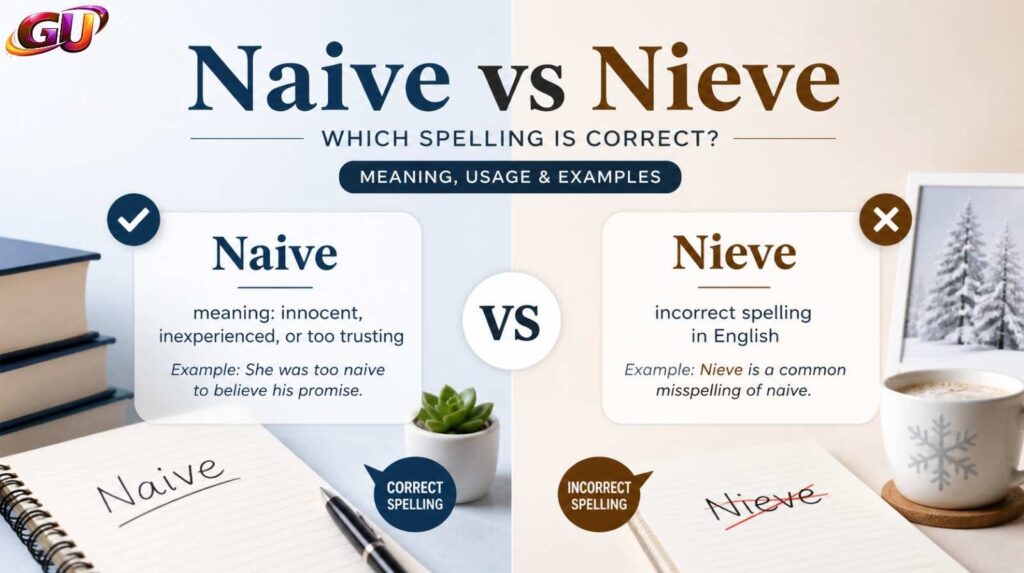
The correct spelling is Naive.
❌ Nieve is not the correct English spelling when referring to someone innocent or inexperienced.
✅ Naive means a person who lacks experience, judgment, or understanding of the world.
Quick Answer
| Word | Correct? | Meaning |
|---|---|---|
| Naive | ✅ Yes | Innocent or inexperienced |
| Nieve | ❌ No | Misspelling in English |
Example Sentences
- She was naive enough to trust the scammer.
- His naive view of business changed after experience.
- It would be naive to ignore the warning signs.
See Also: To Many vs Too Many: Difference And Which Is Correct?
Why Do People Confuse Naive vs Nieve?
Many spelling mistakes happen because English words do not always sound the way they look.
1. Similar Pronunciation
The word naive is pronounced like ny-EEV or nah-eev, so some people guess the spelling incorrectly as nieve.
2. Typing Errors
Fast typing often causes letter swaps. Since “ie” and “ei” combinations are common in English, users may accidentally type nieve.
3. Influence of Other Languages
In Spanish, nieve means snow. This can create confusion for multilingual users.
See Also: Wait vs Weight: Difference, Meaning & Correct Usage
Meaning of Naive in English
The word naive describes someone who is overly trusting, inexperienced, or lacking awareness.
Positive Use of Naive
Sometimes it means innocent and pure-hearted.
- Children often have a naive curiosity about life.
Negative Use of Naive
It can also mean unrealistic or gullible.
- It was naive to believe every online promise.
Synonyms of Naive
- Innocent
- Gullible
- Trusting
- Inexperienced
- Unsuspecting
See Also: Canon vs Cannon Difference And Usage: Which Word Is Correct?
Naive vs Nieve in Real-Life Writing

Misspellings can damage credibility, especially in professional writing, resumes, or business emails.
Case Study: Blog Traffic Loss from Common Misspellings
In 2025, a freelance content writer noticed low engagement on a grammar-focused article. After reviewing Search Console data, they found users were searching for naive spelling, but the article repeatedly used nieve by mistake. Because of this, readers quickly bounced, and rankings stayed low.
After correcting the spelling, improving headings, and adding examples, the article’s click-through rate increased over the next eight weeks. Organic impressions also improved significantly.
This example shows how spelling accuracy impacts SEO, trust, and user experience. Even a small mistake like Nieve vs Naive can reduce authority in Google’s eyes.
See Also: Unselect vs Deselect: Which Term Is Correct?
Data: Why Correct Spelling Matters in 2025–2026
Accurate spelling is more important than ever because search engines reward helpful, trustworthy content.
Recent Insights
- Google continues prioritizing helpful content and user trust signals.
- Studies from HubSpot show readers leave pages quickly when they notice grammar or spelling errors.
- Multiple UX reports in 2025 found trust drops when users see visible mistakes on websites.
What This Means
If you use naive correctly instead of nieve, your content appears more reliable and professional.
References:
Google Search Central
HubSpot Content Marketing Research
Microsoft UX Trust Studies
See Also: Tieing vs Tying: Which Spelling Is Correct In English?
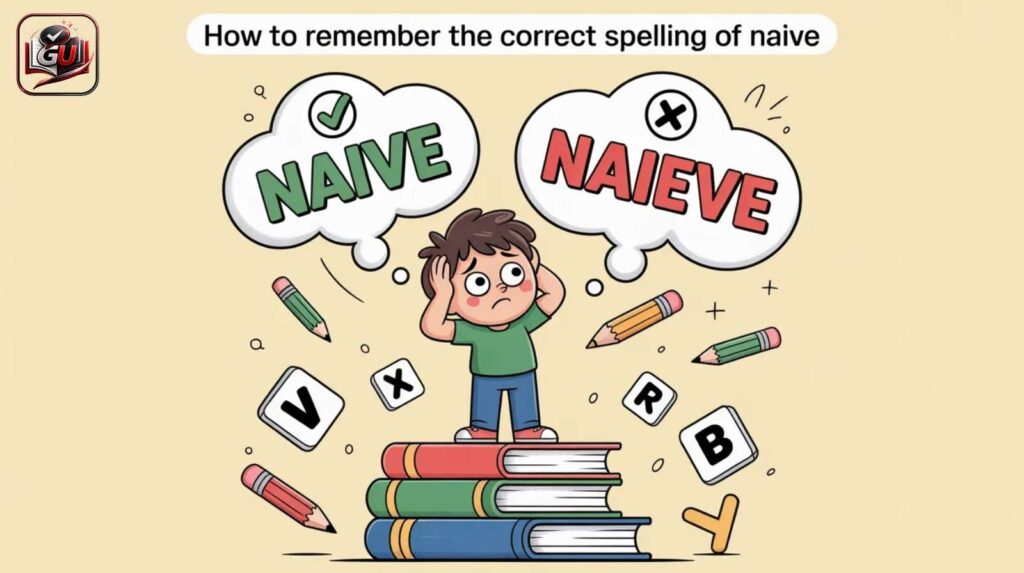
How to Remember the Correct Spelling of Naive
Easy Memory Trick
Think of this pattern:
Na + ive = Naive
The word begins with Na and ends with ive.
Visual Tip
Remember:
❌ Nieve
✅ Naive
Practice Sentence
- Don’t be naive when sharing personal information online.
See Also: Envolved vs Involved: Which Is Correct In English?
Common Mistakes to Avoid
Mistake 1: Using Nieve in English Writing
Incorrect: She was very nieve.
Correct: She was very naive.
Mistake 2: Using Naive as an Insult
The word is descriptive, not always insulting. Context matters.
Mistake 3: Forgetting Tone
Use carefully in professional settings because it can sound judgmental.
FAQ
Q. Is Nieve a real word?
A: In English grammar usage for this meaning, Nieve is considered a misspelling. However, in Spanish, it means snow.
Q. How do you spell naive correctly?
A: The correct spelling is naive.
Q. What does naive mean?
A: It means innocent, inexperienced, or too trusting.
Q. Is naive a negative word?
A: Sometimes yes, but not always. It depends on context.
Q. Why do people type nieve?
A: Usually because of pronunciation confusion or typing mistakes.
Q. Can I use naive in formal writing?
A: Yes, when used correctly and appropriately.
Conclusion
When comparing Naive vs Nieve, the correct English spelling is naive. The word describes someone inexperienced, trusting, or innocent. Meanwhile, nieve is simply a common spelling mistake in English usage.
Using the correct spelling improves your writing, builds trust, and helps SEO performance. Therefore, always choose naive in articles, emails, academic writing, and professional content.
If this guide helped you, bookmark it and share it with others who confuse Naive vs Nieve.
Discover More Article
- Muscle vs Mussel: Which Is The Difference And How To Use Them Correctly?
- Emigrate vs Immigrate: Difference, Meaning & Usage Explained
- Seperate vs Separate: Which Spelling Is Correct?
👉 Keep learning with more easy grammar lessons on GrammerUpdate.com

Noor Fatima is a professional blogger specializing in spelling correction and grammar guidance. She creates clear, practical content to help readers avoid common mistakes, strengthen writing skills, and communicate with confidence in everyday and professional settings.