Have you ever paused while writing and wondered whether it should be “comparable” or “comprable”? It’s a common mistake that catches many writers off guard because the two words look almost identical at first glance. However, only one of them is correct in standard English.
Small spelling errors like this may seem unimportant, but they can affect how professional and trustworthy your writing appears. Whether you’re writing a blog post, an academic paper, a business report, or even a simple email, using the correct spelling helps you communicate more clearly and confidently.
In this guide, we’ll break down the difference between comparable and comprable, explain why the confusion happens, and show you how to use the correct word in real-world situations. By the end, you’ll know exactly which spelling to use and how to avoid this mistake in the future.
What Is the Correct Spelling: Comparable or Comprable?
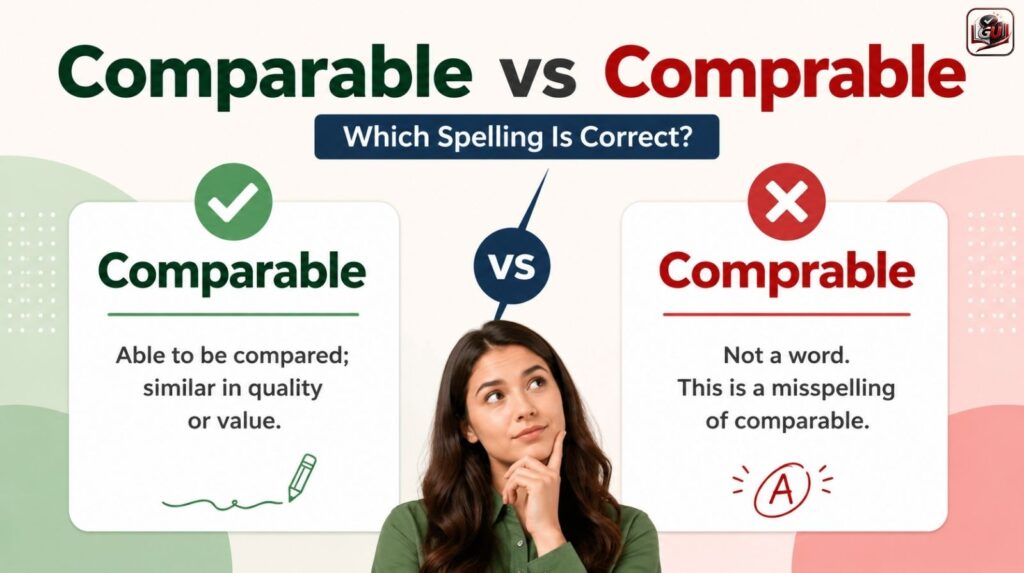
The correct spelling is comparable.
Comparable is a legitimate English adjective that means:
Similar enough to be compared with something else.
Comprable is not recognized as a standard English word in major dictionaries and is considered a spelling error.
Quick Answer
| Word | Correct? | Meaning |
|---|---|---|
| Comparable | ✅ Yes | Able to be compared; similar |
| Comprable | ❌ No | Misspelling of comparable |
Example Sentences
- The two smartphones are comparable in performance.
- Their salaries are comparable to industry standards.
- These results are comparable with last year’s findings.
In every case above, using “comprable” would be incorrect.
What Does Comparable Mean?
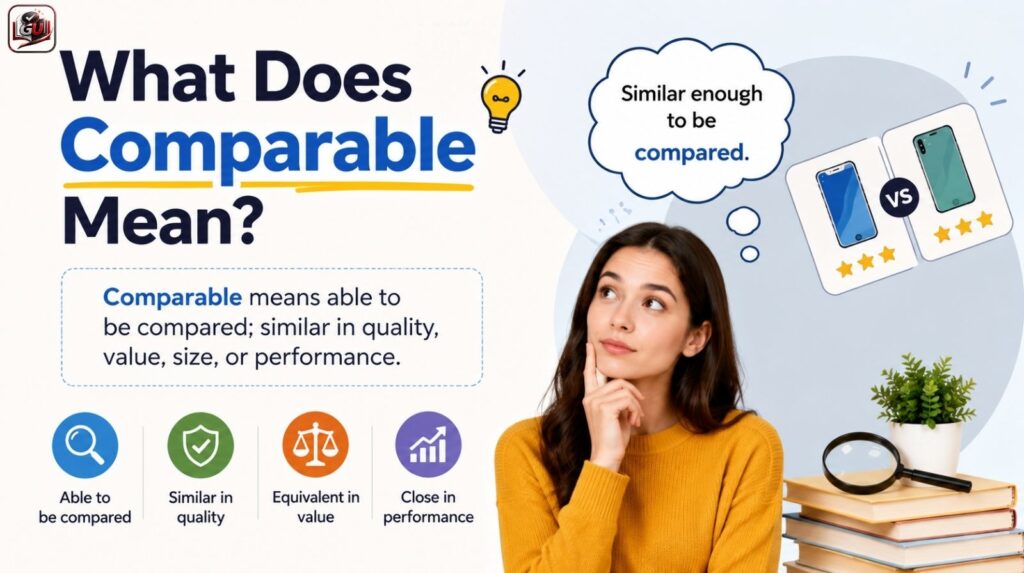
The word comparable comes from the verb compare, which means to examine similarities and differences between two things.
When something is comparable, it shares enough characteristics with another thing to allow a meaningful comparison.
Common Definitions
Comparable can mean:
- Similar in quality
- Equivalent in value
- Nearly equal in performance
- Worth comparing
Examples in Different Contexts
Business
The company’s profits are comparable to those of its competitors.
Education
The students achieved comparable test scores.
Technology
This laptop offers comparable performance to more expensive models.
These examples show how the word naturally appears in professional and everyday communication.
Why Do People Misspell Comparable as Comprable?
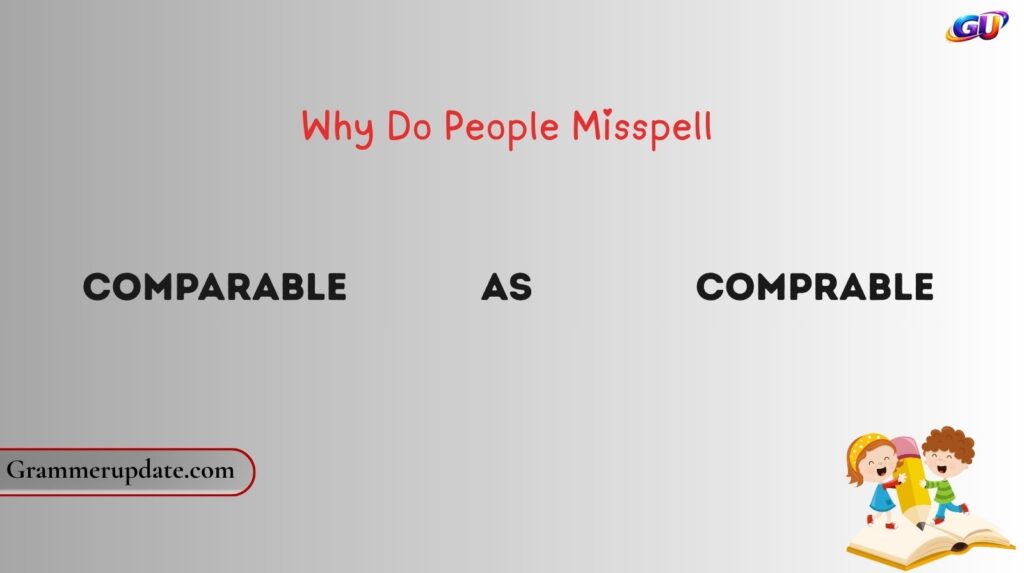
The misspelling occurs because English pronunciation can sometimes be misleading.
When spoken quickly, some people hear:
com-pruh-bul
instead of seeing the full spelling:
com-pa-ra-ble
As a result, writers accidentally remove the second “a” and create the incorrect form “comprable.”
Common Reasons for the Mistake
Fast Typing
Writers often skip letters when typing quickly.
Pronunciation Confusion
The middle vowel sound may not be strongly pronounced.
Lack of Proofreading
Small spelling errors can easily go unnoticed.
Similar English Mistakes
Many English words are frequently misspelled due to pronunciation differences:
| Correct Word | Common Misspelling |
|---|---|
| Comparable | Comprable |
| Decision | Descision |
| Separate | Seperate |
| Accommodation | Accomodation |
| Necessary | Neccessary |
This pattern shows why spelling mistakes remain common even among experienced writers.
Comparable vs Comprable: Side-by-Side Comparison
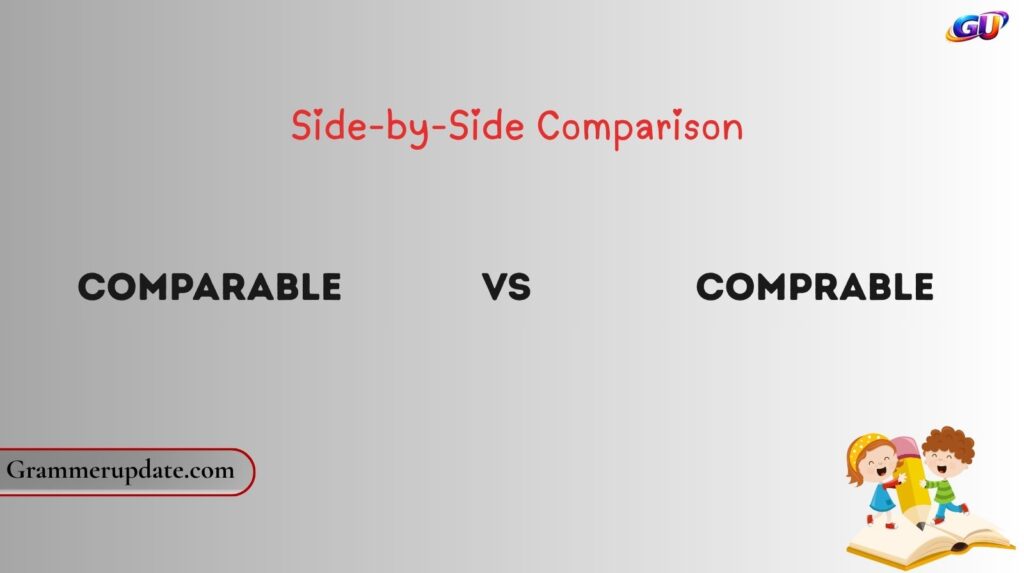
Understanding the distinction becomes easier when viewed together.
| Feature | Comparable | Comprable |
|---|---|---|
| Dictionary Word | Yes | No |
| Grammatically Correct | Yes | No |
| Accepted in Academic Writing | Yes | No |
| Accepted in Business Writing | Yes | No |
| Appears in Major Dictionaries | Yes | No |
| Recommended for SEO Content | Yes | No |
Key Takeaway
If you’re writing an article, email, report, essay, or website content, always choose comparable.
How to Remember the Correct Spelling of Comparable
A simple memory trick can help.
Think of the Root Word
The word comes from:
Compare → Comparable
Notice that compare contains the letter “a” before the “r.”
That same pattern remains in comparable.
Memory Formula
Compare + able = Comparable
If you can remember the base word “compare,” you’ll naturally spell comparable correctly.
Visual Trick
Break it into parts:
Com + par + able
This makes the spelling easier to recognize and recall.
Real-Life Example: How a Small Spelling Error Affected Website Credibility
A freelance content writer was creating product comparison articles for an e-commerce website. The content was professionally researched, well-formatted, and optimized for search engines.
However, during a routine content audit, the editor noticed the word “comprable” appeared more than twenty times across multiple articles.
At first glance, the error seemed minor. After all, readers could still understand the intended meaning. Yet analytics data revealed an interesting pattern. Pages containing frequent spelling mistakes had slightly higher bounce rates and lower engagement compared to similar pages without errors.
The editorial team corrected every instance of “comprable” to “comparable” and improved proofreading procedures. Over the following months, user engagement improved, and customer feedback became more positive.
This example highlights an important lesson: spelling accuracy influences credibility. Readers often associate correct grammar and spelling with professionalism, expertise, and trustworthiness. Even a small mistake can affect how audiences perceive your content.
For bloggers, marketers, students, and business owners, paying attention to details like “comparable” versus “comprable” can help create stronger and more trustworthy communication.
Why Correct Spelling Matters for SEO and Online Writing
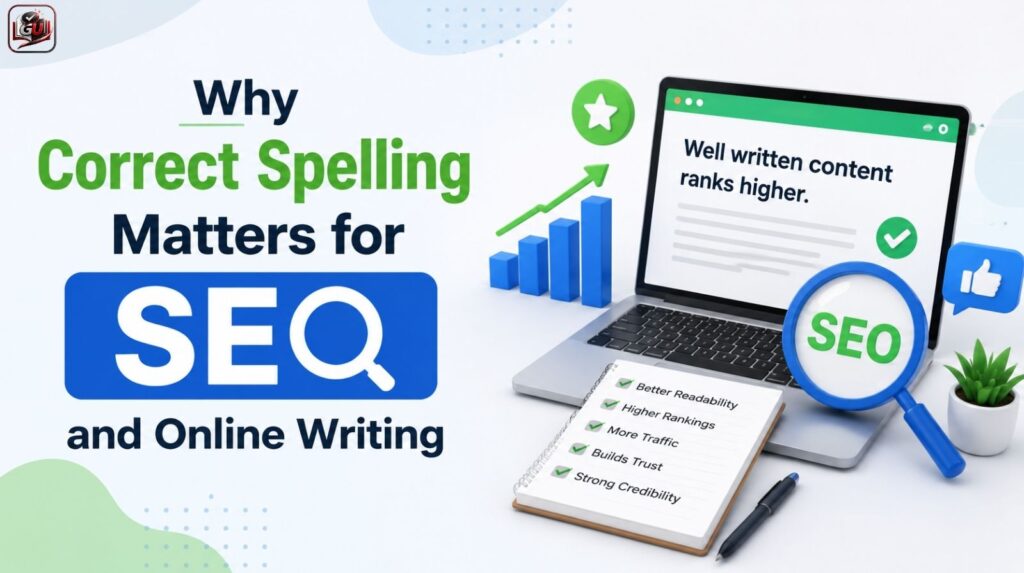
Search engines have become increasingly sophisticated.
While a single spelling error won’t necessarily destroy rankings, repeated mistakes can negatively affect user experience.
User Trust
Readers trust content that appears polished and professional.
Better Readability
Correct spelling makes content easier to understand.
Higher Engagement
Users are more likely to stay on pages that look credible.
Improved Brand Reputation
Businesses benefit from consistent and accurate communication.
According to Google’s Search Quality guidelines, high-quality content should demonstrate expertise, accuracy, and trustworthiness. Consistent spelling contributes to that overall perception.
2025–2026 Writing and SEO Trends
Recent industry reports from content marketing and SEO platforms indicate that content quality remains one of the strongest ranking factors in modern search engines.
Key findings include:
- High-quality content continues to outperform low-quality content.
- User experience signals influence engagement metrics.
- Trust and credibility remain essential for content performance.
- Editorial accuracy contributes to positive reader perception.
As search engines become better at evaluating content quality, attention to spelling and grammar becomes increasingly important.
How to Use Comparable Correctly in Writing
Knowing the meaning is only part of the process. You should also understand proper usage.
Comparable in Academic Writing
Researchers found comparable results across all test groups.
Comparable in Business Writing
The new pricing model is comparable to competitor offerings.
Comparable in Everyday Communication
These two restaurants offer comparable service.
Comparable in Product Reviews
This camera delivers comparable image quality to premium models.
Using the word naturally helps your writing sound professional and precise.
Common Phrases That Use Comparable
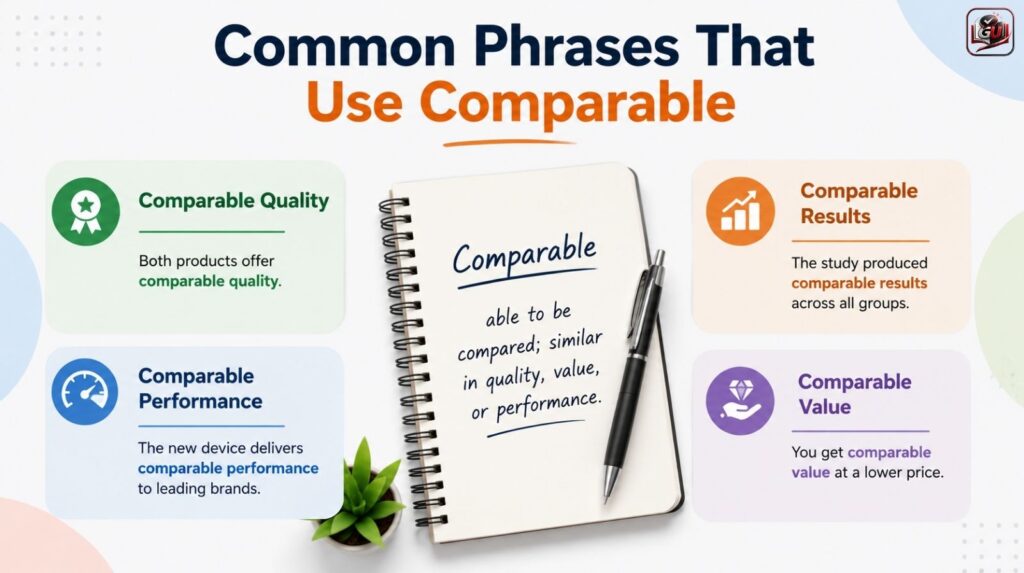
Many writers encounter comparable in fixed expressions.
Comparable Results
The experiment produced comparable results.
Comparable Quality
Both products offer comparable quality.
Comparable Performance
The software demonstrated comparable performance.
Comparable Value
Customers receive comparable value at a lower price.
These phrases frequently appear in marketing, research, technology, and business writing.
Checklist: Avoiding the “Comprable” Mistake
Before publishing content, use this quick checklist.
Writing Checklist
✔ Use comparable, never comprable
✔ Remember the root word compare
✔ Run a spell-check before publishing
✔ Proofread headings and subheadings
✔ Review product descriptions carefully
✔ Check academic and business documents for consistency
Following these steps can eliminate one of the most common spelling mistakes related to this word.
FAQs
Q. Is comprable a real word?
A: No. Comprable is not considered a standard English word and is generally viewed as a misspelling of comparable.
Q. Which spelling is correct: comparable or comprable?
A: Comparable is the correct spelling.
Q. What does comparable mean?
A: Comparable means similar enough to be compared or nearly equivalent in quality, value, or performance.
Q. Why do people write comprable?
A: Many people misspell the word because they pronounce it quickly and accidentally omit the second “a.”
Q. Is comparable used in professional writing?
A: Yes. Comparable is commonly used in academic, business, technical, and everyday writing.
Q. Can spelling mistakes affect SEO?
A: While isolated mistakes may not directly impact rankings, frequent spelling errors can reduce user trust, readability, and overall content quality.
Q. How can I remember the spelling of comparable?
A: Remember the root word compare. Since compare contains the letter “a,” comparable keeps that same pattern.
Conclusion
When comparing comprable vs comparable, the answer is clear: comparable is the correct spelling, while comprable is a common misspelling.
Understanding the difference helps improve your writing, strengthen credibility, and create a better experience for readers. Whether you’re writing blog posts, business reports, academic papers, or website content, using the correct spelling demonstrates professionalism and attention to detail.
The next time you’re tempted to write “comprable,” remember the root word compare and confidently choose comparable instead.
References
- Merriam-Webster Dictionary
- Cambridge Dictionary
- Google Search Quality Evaluator Guidelines
👉Keep learning with more easy grammar lessons on GrammerUpdate.com

Noor Fatima is a professional blogger specializing in spelling correction and grammar guidance. She creates clear, practical content to help readers avoid common mistakes, strengthen writing skills, and communicate with confidence in everyday and professional settings.