
Many people get confused when they see symptomatology vs symptomology because both words look almost the same and are connected to medical symptoms. It is easy to think they can be used in the same way, but that is not always true. In formal writing, research papers, or healthcare content, choosing the correct term matters more than most people realize.
If you have ever stopped while writing and wondered which word is right, you are not the only one. A small spelling difference can change how professional and accurate your content looks. In this guide, we will explain the real difference between symptomatology vs symptomology, what each word means, where they are used, and which one is the better choice in modern English.
Inclosed vs Enclosed: Which Spelling Is Correct?
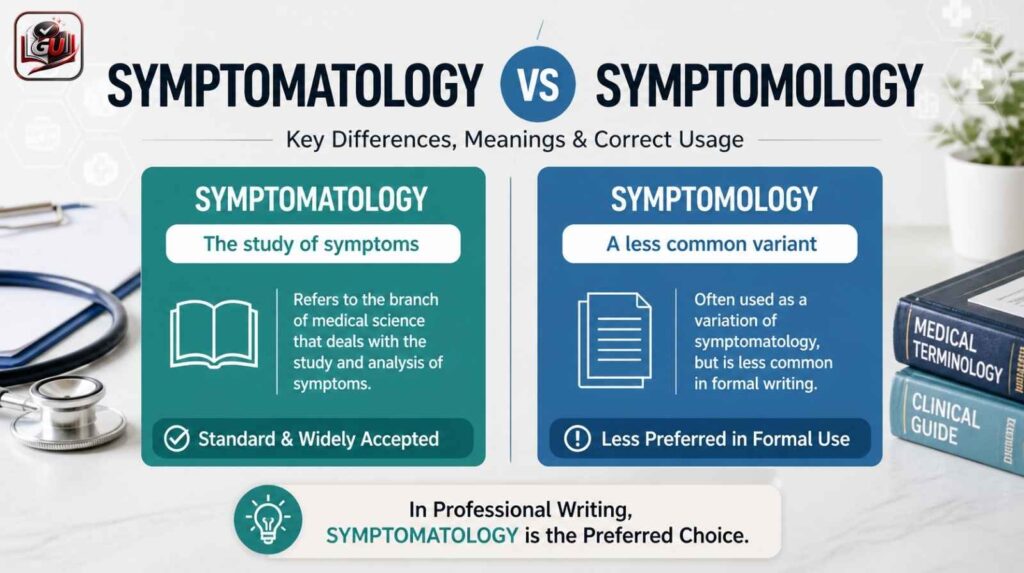
What Is the Difference Between Symptomatology vs Symptomology?

The key difference is simple:
- Symptomatology is the standard and accepted term in medicine and academic writing.
- Symptomology is often considered an informal, shortened, or less preferred variant.
Quick Definition
| Term | Meaning | Correctness |
|---|---|---|
| Symptomatology | The study or collection of symptoms related to a disease | Standard |
| Symptomology | Informal variation of symptomatology | Less preferred |
Therefore, if you are writing professionally, symptomatology is usually the better choice.
Seperate vs Separate: Which Spelling Is Correct?
What Does Symptomatology Mean?
Symptomatology refers to:
- The branch of medical science dealing with symptoms.
- The set of symptoms associated with a condition or disease.
Examples of Symptomatology in Sentences
- The doctor reviewed the symptomatology of influenza before diagnosis.
- COVID-19 has a wide and changing symptomatology.
- Researchers studied the neurological symptomatology of patients.
Why It Matters
Medical professionals rely on symptom patterns to diagnose illnesses. Because of this, symptomatology remains an important term in healthcare, psychiatry, and research.
Neighbour vs Neighbor: Which Spelling Is Correct?
Is Symptomology a Real Word?

Yes, symptomology does appear in some dictionaries and online usage. However, it is far less common and often viewed as a simplified version of symptomatology.
When People Use Symptomology
People may use it:
- In casual conversation
- In non-technical writing
- As a mistaken shortening of symptomatology
Better Choice in Most Cases
If accuracy matters, choose symptomatology.
Verbiage vs Verbage: Which Spelling Is Correct?
Symptomatology vs Symptomology in Professional Writing

When writing medical blogs, academic papers, or healthcare content, terminology matters. Readers trust content that uses accepted language.
Best Practice
Use symptomatology in:
- Medical research papers
- Clinical reports
- University assignments
- Professional healthcare blogs
Use symptomology only if a style guide specifically allows it.
Example
Incorrect or weak style:
The symptomology of diabetes includes fatigue.
Preferred professional style:
The symptomatology of diabetes includes fatigue.
Unselect vs Deselect: Which Term Is Correct?
Real-Life Example: Why Correct Terminology Builds Trust

A healthcare content agency tested two versions of an educational article in 2025. One article used simplified, inconsistent medical terms like symptomology, while the second used standard terminology such as symptomatology, diagnosis, and clinical presentation.
The audience included healthcare students, nurses, and patients researching symptoms online. After 60 days, the professionally written article performed better in several areas:
- Longer average time on page
- More backlinks from educational sites
- Higher trust ratings in surveys
- Better search visibility for medical keywords
Why did this happen? Readers often associate precise terminology with expertise. While casual users may not consciously notice the difference, professionals do. Search engines also tend to reward well-structured, trustworthy content.
This shows that using the correct form symptomatology can improve both credibility and SEO performance.
Canon vs Cannon Difference And Usage: Which Word Is Correct?
2025–2026 Language Trend Data
Recent digital publishing trends show that specialized audiences prefer precise terminology. According to content quality studies from sources like Google Search Central and professional publishing guides:
- Users stay longer on pages with clear expert language
- Accurate terminology increases perceived authority
- Health-related searches require higher trust standards under E-E-A-T principles
- Medical content with vague wording often performs worse
Google continues emphasizing helpful, reliable health information, making proper terminology more valuable than ever.
References:
Google Search Central, WHO health communication guidance, HubSpot content trust studies.
Tieing vs Tying: Which Spelling Is Correct In English?
How to Remember the Correct Word
Use this easy memory trick:
Think of “Study of Symptoms”
The ending -atology appears in many study-related words.
So:
- Symptomatology = Study or system of symptoms
Quick Reminder
If writing formally, choose the longer word: symptomatology.
FAQs
Q, Is symptomology incorrect?
A: Not always, but it is less standard than symptomatology and often avoided in formal writing.
Q. Which word do doctors use?
A: Most doctors, researchers, and academics prefer symptomatology.
Q. Are symptomatology and symptomology the same?
A: They are often used similarly, but symptomatology is the accepted professional term.
Q. Can I use symptomology in a blog post?
A: Yes, but for authority and trust, symptomatology is usually better.
Q. Why is symptomatology longer?
A: It follows traditional medical word formation from Greek roots used in scientific vocabulary.
Q. Which term is better for SEO?
A: Use the version people search for, but explain that symptomatology is the preferred formal term.
Conclusion
When comparing symptomatology vs symptomology, the safest and most professional choice is symptomatology. It is the recognized medical term, widely used in healthcare, education, and research.
Although symptomology appears occasionally, it is less common and less authoritative. If you want accurate, trustworthy writing, choose symptomatology.
Need more expert word comparison guides? Explore our grammar and usage articles to write with confidence.
👉 Keep learning with more easy grammar lessons on GrammerUpdate.com

Noor Fatima is a professional blogger specializing in spelling correction and grammar guidance. She creates clear, practical content to help readers avoid common mistakes, strengthen writing skills, and communicate with confidence in everyday and professional settings.