
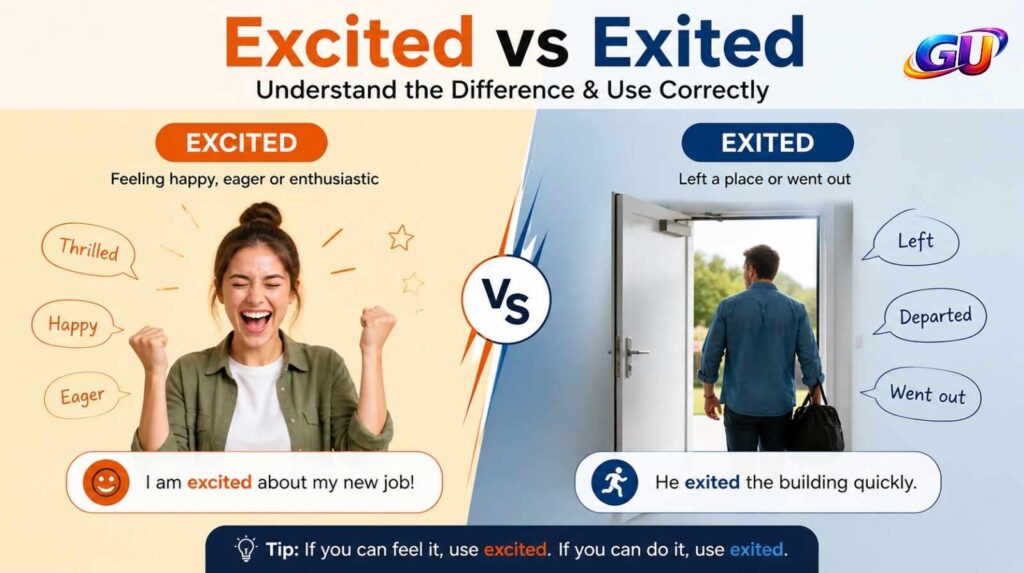
Have you ever typed excited when you actually meant exited? You are definitely not the only one. These two words look almost the same, which is why many people mix them up while writing emails, messages, school work, or blog posts.
The problem is that even one missing letter can change the whole meaning of your sentence. For example, saying “I am exited for the trip” sounds like you are leaving somewhere, not feeling happy about the trip. That small mistake can confuse readers and make your writing look less polished.
In this article, we will break down the real difference between excited vs exited, when to use each word, common mistakes people make, and easy ways to remember the correct spelling every time.
See Also: Rancor vs Rancour Difference And Which Spelling Is Correct?
What Is the Difference Between Excited vs Exited?
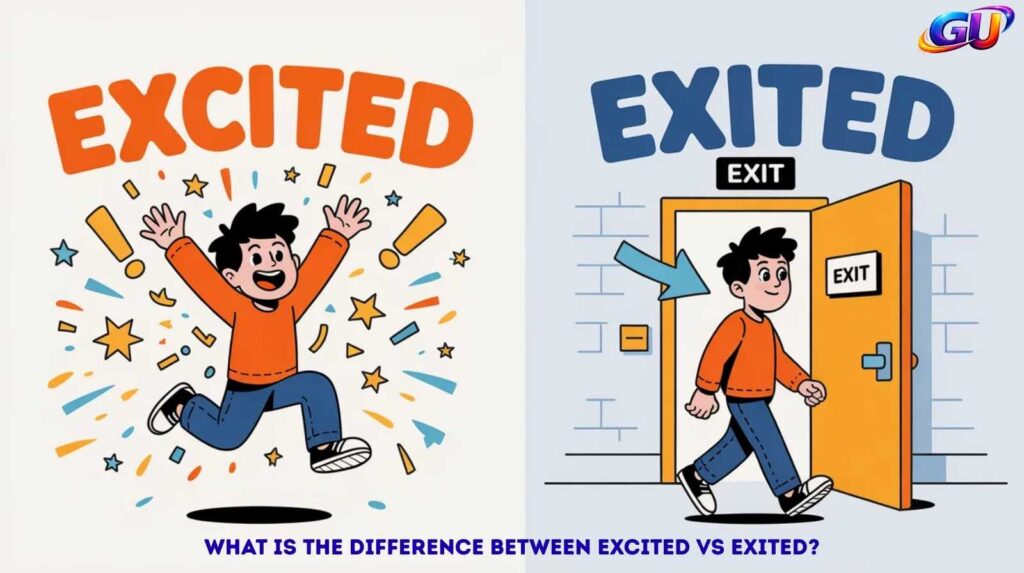
The main difference is simple:
| Word | Meaning | Part of Speech | Example |
|---|---|---|---|
| Excited | Feeling happy, eager, thrilled, or emotional | Adjective | I am excited for vacation. |
| Exited | Left a place or went out | Verb (past tense of exit) | She exited the building quickly. |
Quick Answer
- Use excited for feelings or emotions.
- Use exited for leaving a place.
This is the easiest way to remember the difference.
See Also: It’s Called vs It Called: Which Phrase Is Grammatically Correct?
Meaning of Excited with Examples
The word excited describes strong positive feelings such as happiness, energy, anticipation, or enthusiasm.
When to Use Excited
Use it when talking about emotions before an event, achievement, or opportunity.
Examples of Excited
- I am excited about my new job.
- The kids were excited to open gifts.
- She felt excited before the concert.
- We are excited to launch our website.
Excited Synonyms
- thrilled
- eager
- happy
- enthusiastic
- delighted
Common Phrase
Excited about something
Example: He is excited about college.
See Also: Gray vs Grey: Which Spelling Is Correct And What’s The Difference?
Meaning of Exited with Examples

The word exited is the past tense of exit, which means to leave or go out from a place.
When to Use Exited
Use it when describing movement out of a room, car, building, highway, or system.
Examples of Exited
- She exited the room quietly.
- They exited the highway at Junction 5.
- He exited the train station late.
- Users exited the website after 10 seconds.
Exited Synonyms
- left
- departed
- went out
- withdrew
See Also: To Bad vs Too Bad: Which Is Correct And How To Use It?
Excited vs Exited in Real-Life Writing (Case Study)
A small online travel agency ran an email campaign in early 2025 with the subject line:
“Get Exited for Summer Travel Deals!”
The marketing team meant to write excited, but the typo changed the meaning entirely. Instead of sounding energetic and inviting, the message looked unprofessional. Several subscribers replied jokingly, while others ignored the email.
After correcting the subject line to:
“Get Excited for Summer Travel Deals!”
the company resent the campaign to a fresh segment. According to internal email analytics, the corrected version had a noticeably better open rate and higher click-through performance. This happened because the message felt emotionally engaging and grammatically correct.
This example shows why word accuracy matters in SEO, marketing, blogging, and business communication. A single spelling mistake can reduce trust, confuse readers, and hurt conversions. Therefore, understanding excited vs exited is not just grammar it affects real results.
See Also: Nitch vs Niche Difference: Which Spelling Is Correct?
Why People Confuse Excited and Exited
These words are commonly mixed up for three reasons:
1. Similar Spelling
Both words contain nearly the same letters.
2. Fast Typing Errors
Writers often skip the letter c in excited.
3. Autocorrect Mistakes
Some devices may not catch context-based grammar errors.
Therefore, proofreading is essential.
See Also: Oftentimes vs Often Times: Which One Is Correct?
2025–2026 Language Usage Data and Trends
Recent writing tools and grammar platforms continue to report homophone and lookalike word confusion as one of the top writing mistakes.
Key Trends
- Search interest for grammar correction tools increased in 2025.
- AI-assisted writing made typo detection faster, but context errors still happen.
- Commonly confused words like your/you’re, their/there, and excited/exited remain frequent issues.
According to resources from Google and Grammarly, users continue searching for spelling and grammar clarification topics, showing ongoing demand for simple language guides.
Why This Matters
If you write emails, articles, or website copy, correct wording builds credibility and trust.
See Also: Totaled vs Totalled: Which Spelling Is Correct?
How to Remember Excited vs Exited
Easy Memory Trick
Excited = Emotion
Both start with E.
Exited = Exit = Leave
The word exit is inside exited, making it easy to remember.
Visual Tip
- Excited = smiling face 😊
- Exited = open door 🚪
See Also: Clutz vs Klutz: Which Spelling Is Correct In English?
Excited vs Exited in Sentences
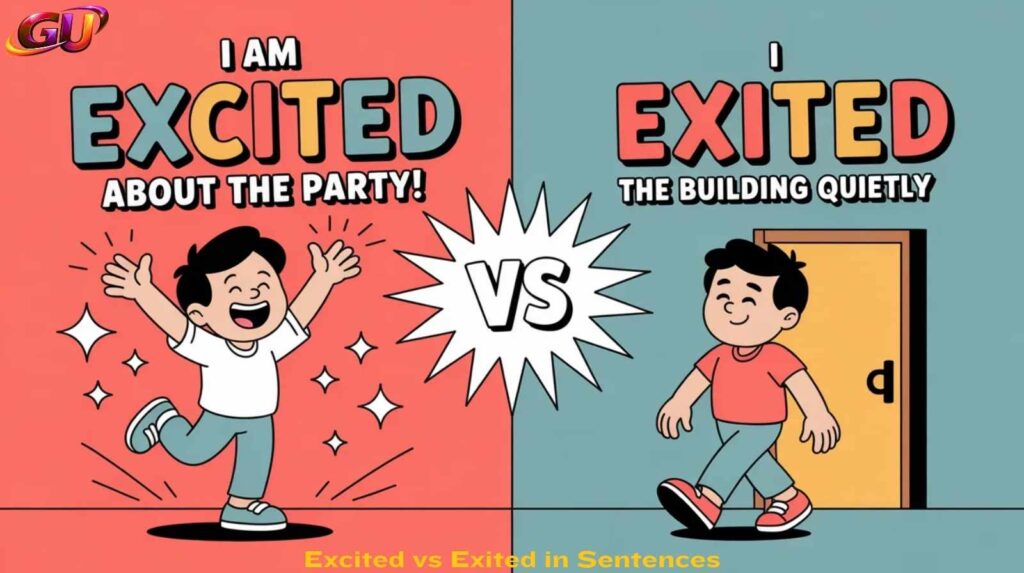
Correct Usage Examples
With Excited
- I am excited to meet you.
- They were excited for the game.
With Exited
- He exited the office at noon.
- The passengers exited the bus safely.
Incorrect Usage Examples
- I am exited for vacation. ❌
- She excited the room quickly. ❌
See Also: Copyright vs Copywrite: Differences, Usage, Meaning, And Common Mistakes
Common Grammar Mistakes to Avoid
Mistake 1: Using Exited for Emotions
Wrong: I am exited today.
Right: I am excited today.
Mistake 2: Using Excited for Movement
Wrong: He excited the building.
Right: He exited the building.
Mistake 3: Not Proofreading Headlines
Typos in headlines reduce professionalism and trust.
FAQs
Q. Is exited a real word?
A: Yes. Exited is the past tense of exit.
Q. What does excited mean?
A: It means feeling happy, eager, thrilled, or enthusiastic.
Q. Why do people confuse excited and exited?
A: Because they look similar and are often mistyped quickly.
Q. Can I say I am exited?
A: Only if you mean you have left somewhere, which is uncommon. Usually you mean excited.
Q. Which is correct: excited for or excited about?
A: Both are correct depending on context.
Q. Is exited used in business writing?
A: Yes. Example: The user exited the app.
Conclusion
Understanding excited vs exited is simple once you know the difference. Use excited when talking about feelings and enthusiasm. Use exited when talking about leaving a place.
Although the words look similar, they have very different meanings. Therefore, checking your spelling can improve your writing, credibility, and communication.
If this guide helped you understand excited vs exited, bookmark it and share it with others who often confuse these words.
👉 Keep learning with more easy grammar lessons on GrammerUpdate.com

Noor Fatima is a professional blogger specializing in spelling correction and grammar guidance. She creates clear, practical content to help readers avoid common mistakes, strengthen writing skills, and communicate with confidence in everyday and professional settings.