Have you ever typed the word labeling and then stopped to wonder whether it should actually be labelling? It’s a small difference, but one that causes confusion for many writers, students, editors, and professionals.
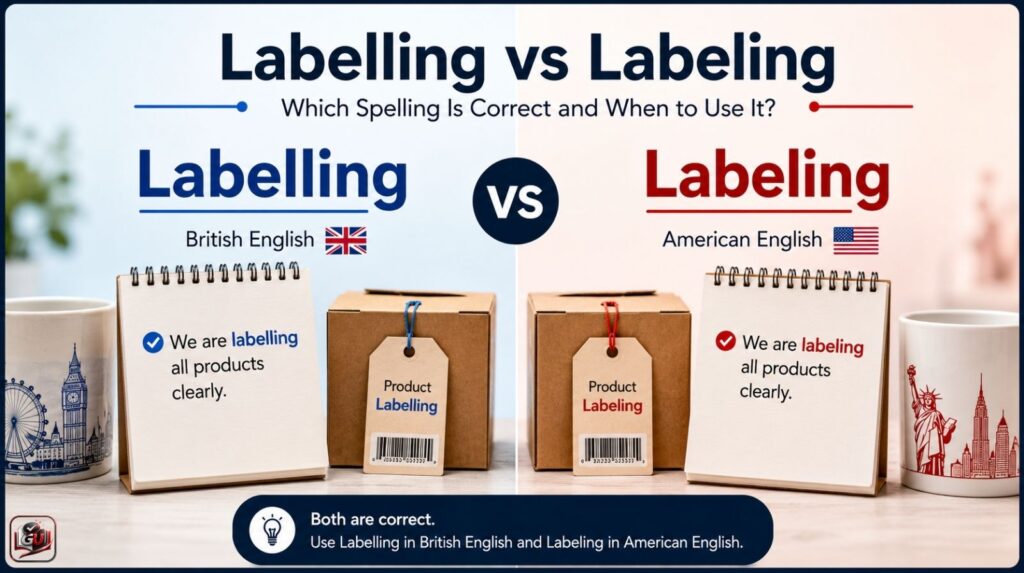
The reason both spellings appear online is simple: they’re both correct. The choice depends on whether you’re using British English or American English. However, if you’re writing for a specific audience, using the wrong version can make your content look inconsistent or less polished.
In this article, you’ll discover the difference between labelling vs labeling, learn why the spellings vary, see real-world examples, and find out which version is the right choice for your writing. By the end, you’ll be able to use either spelling with confidence and avoid a common mistake that trips up many English writers.
What Is the Difference Between Labelling and Labeling?
The difference between labelling and labeling comes down to regional spelling conventions.
| Spelling | English Variant | Example |
|---|---|---|
| Labelling | British English | The company is labelling its products correctly. |
| Labeling | American English | The company is labeling its products correctly. |
Both words mean the same thing:
Labelling/Labeling refers to the act of attaching a label, identifying something, categorizing information, or naming an item.
The only distinction is geographical preference.
Why Does the Spelling Change?
British English often doubles the final consonant before adding a suffix.
For example:
- Travel → Travelling
- Cancel → Cancelling
- Model → Modelling
- Label → Labelling
American English usually keeps a single consonant.
For example:
- Travel → Traveling
- Cancel → Canceling
- Model → Modeling
- Label → Labeling
Therefore, neither spelling is wrong. The context determines which one is appropriate.
Quick Answer
If you write for a UK, Australian, New Zealand, or Canadian audience, use labelling.
If you write for a US audience, use labeling.
What Does Labeling or Labelling Mean?
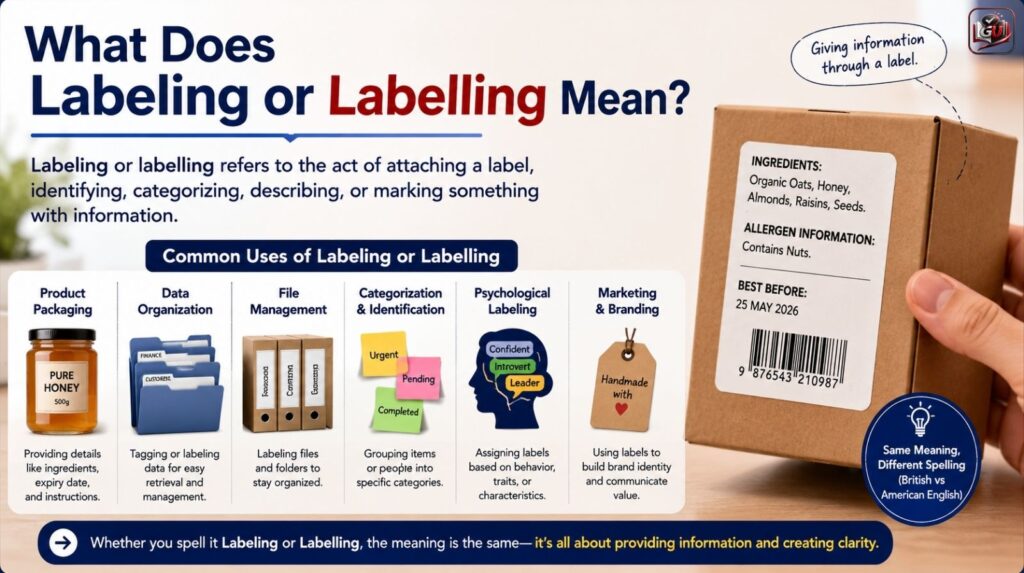
The verb label means to identify, classify, describe, or mark something with information.
Common Uses
The term can apply to:
- Product packaging
- Data organization
- File management
- Psychological categorization
- Marketing and branding
- Educational materials
Examples in Sentences
British English:
- The warehouse is labelling all incoming shipments.
- Proper labelling improves customer trust.
American English:
- The warehouse is labeling all incoming shipments.
- Accurate labeling helps consumers make informed decisions.
In Digital Marketing
Content creators frequently use labeling systems to organize:
- Website categories
- Product collections
- Blog tags
- User-generated content
Effective labeling improves user experience and website navigation.
When Should You Use Labelling?
Use labelling when writing in British English.
This spelling is widely accepted in:
- United Kingdom
- Australia
- New Zealand
- Ireland
- Most Commonwealth countries
Examples of Correct Usage
Product Packaging
Manufacturers must follow strict labelling regulations before selling products.
Education
Teachers use colour-coded labelling systems to organize classroom materials.
Healthcare
Accurate medicine labelling reduces the risk of patient errors.
Style Guide Tip
If your organization follows British English style guidelines, every related word should remain consistent.
Examples:
- Labelling
- Labelled
- Traveller
- Travelling
Consistency is more important than personal preference.
When Should You Use Labeling?
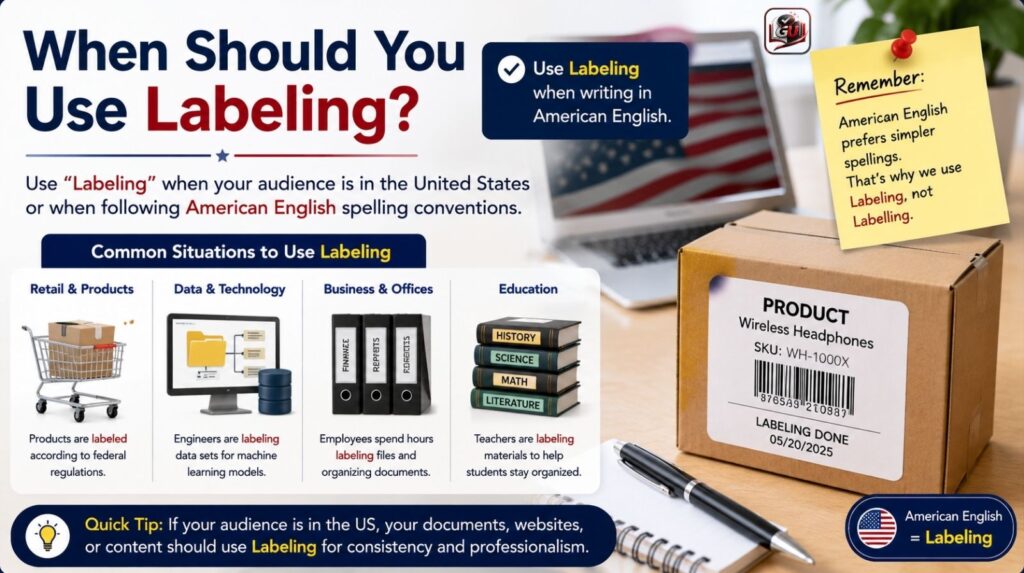
Use labeling when writing in American English.
This version appears in:
- US newspapers
- American business publications
- Academic journals following US style
- Most American websites
Examples of Correct Usage
Retail
The store is labeling products according to federal regulations.
Data Analysis
Researchers are labeling thousands of images for machine learning models.
Office Management
Employees spend hours labeling folders and digital files.
American Style Pattern
American English generally favors simpler spellings.
Examples include:
| British English | American English |
|---|---|
| Labelling | Labeling |
| Travelling | Traveling |
| Modelling | Modeling |
| Cancelling | Canceling |
Recognizing this pattern makes many spelling decisions easier.
Labelling vs Labeling: Side-by-Side Comparison
The easiest way to remember the distinction is through a direct comparison.
| Feature | Labelling | Labeling |
|---|---|---|
| Meaning | Adding labels or identifying something | Adding labels or identifying something |
| Correct? | Yes | Yes |
| British English | Preferred | Less common |
| American English | Rare | Preferred |
| Professional Use | UK-focused content | US-focused content |
| Pronunciation | Same | Same |
| Grammar | Verb form | Verb form |
Which Version Is More Common Online?
Because the United States has a massive online audience, labeling often appears more frequently across websites, blogs, and digital publications.
However, businesses targeting UK audiences should continue using labelling to align with reader expectations.
Does Google Consider Them Different?
Search engines understand that labelling and labeling are regional variants.
Google can generally recognize both spellings as equivalent terms. However, using the preferred spelling of your target audience can improve user trust and content relevance.
Real-Life Example: How One Brand Improved User Trust Through Consistent Labeling
Several years ago, a multinational e-commerce company launched separate websites for customers in the United States and the United Kingdom. The content team initially copied product descriptions from the US website directly to the UK version.
Although the products remained the same, customer feedback revealed an unexpected issue. British visitors noticed American spellings throughout the site, including words such as “color,” “organize,” and “labeling.”
While the spelling differences did not prevent purchases, users reported that the site felt less localized and less trustworthy. Some customers even assumed the company was not genuinely operating within the UK market.
The company responded by creating region-specific style guides. Every page targeting British users was updated to include British spellings such as “colour,” “organise,” and “labelling.”
After implementing these changes, engagement metrics improved. Visitors spent more time on product pages, and customer feedback became more positive. The company learned an important lesson: language consistency influences credibility.
This example demonstrates why choosing between labelling and labeling is more than a grammar issue. It directly affects audience perception and user experience.
Language Trends and Usage Statistics (2025–2026)
Recent language usage trends show that regional spelling preferences remain strong despite increasing globalization.
Key Observations
- American English continues to dominate much of the web due to the size of the US digital market.
- British English remains the standard across the UK, Australia, New Zealand, and many international organizations.
- Search engines recognize both spellings and typically understand them as equivalent terms.
- Businesses increasingly localize spelling based on geographic audiences to improve engagement and trust.
What This Means for Writers
If your audience is primarily American, choose labeling.
If your audience is British or international with British English preferences, choose labelling.
Most importantly, avoid switching between the two spellings within the same document.
How to Remember the Difference
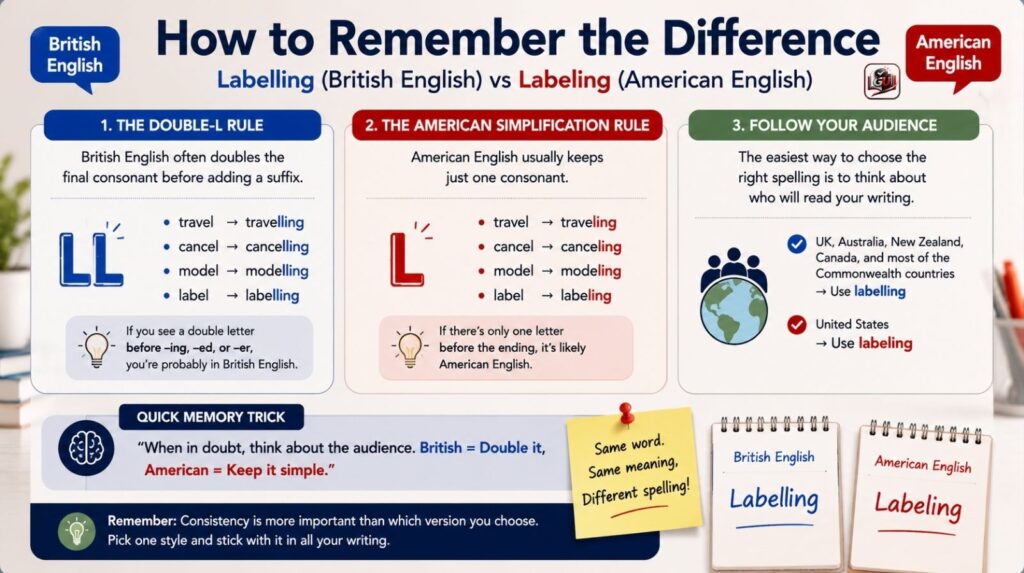
Many writers struggle because both versions look correct.
Use these simple memory tricks.
Remember the Double-L Rule
British English often doubles the final consonant.
Examples:
- Travelling
- Modelling
- Cancelling
- Labelling
If you’re writing British English, the extra L is usually a clue.
Remember the American Simplification Rule
American English often uses a single consonant before suffixes.
Examples:
- Traveling
- Modeling
- Canceling
- Labeling
Follow Your Audience
Ask yourself:
Who will read this content?
If the answer is:
- Americans → Use labeling
- British readers → Use labelling
This simple question solves most spelling dilemmas.
Best Practices for Consistent Writing
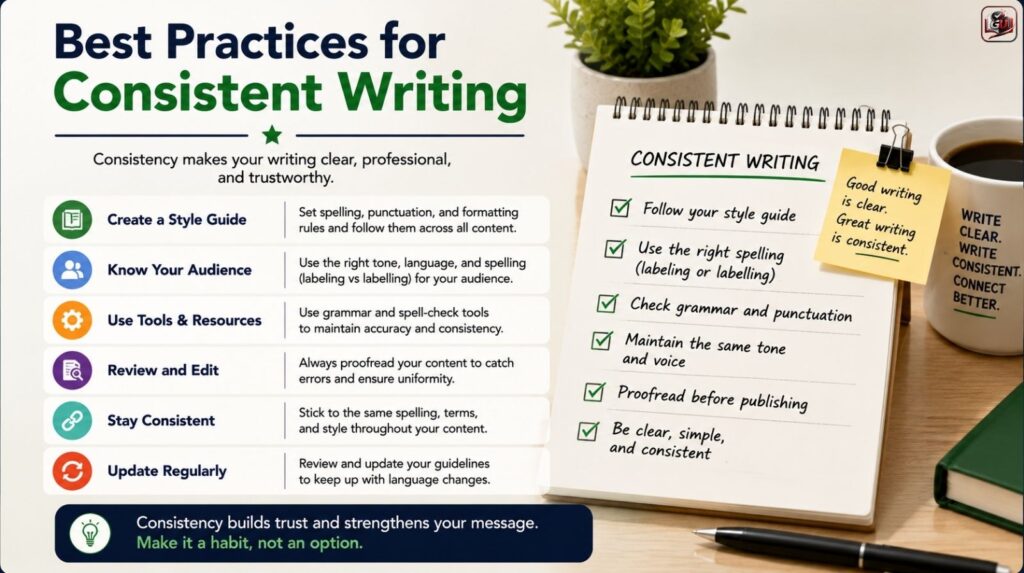
Create a Style Guide
Whether you’re writing blog posts, reports, or marketing content, establish a spelling standard.
Check Regional Settings
Your writing software may automatically suggest spellings based on language settings.
Review Before Publishing
Look for inconsistent spellings throughout your content.
Match Audience Expectations
Readers notice language details more than many writers realize.
Consistent spelling helps build professionalism and trust.
FAQs
Q. Is labelling correct?
A: Yes. Labelling is the standard British English spelling.
Q. Is labeling correct?
A: Yes. Labeling is the standard American English spelling.
Q. Which spelling should I use for SEO?
A: Use the version that matches your target audience. Search engines generally understand both spellings.
Q. Do labelling and labeling have different meanings?
A: No. Both words have exactly the same meaning and pronunciation.
Q. Is labelling used in Canada?
A: Canadian English often follows British spelling patterns, although both versions may appear depending on the organization or style guide.
Q. Which spelling is more common globally?
A: Labeling often appears more frequently online because of the large amount of American content published on the internet.
Q. Should I use both spellings in the same article?
A: No. Choose one spelling and remain consistent throughout your content.
Conclusion
The debate between labelling vs labeling is not about right versus wrong. Both spellings are correct, but they belong to different versions of English.
Use labelling for British English and labeling for American English. The meaning remains identical, but choosing the appropriate spelling helps your writing feel natural to your audience.
Whether you’re creating blog posts, product descriptions, academic papers, or marketing materials, consistency is the key. Pick the spelling that matches your readers and stick with it throughout your content.
By understanding the difference between labelling vs labeling, you’ll write with greater confidence, improve readability, and create a more professional experience for your audience.
References
- Google Search Central
- Merriam-Webster Dictionary
- Cambridge Dictionary
👉Keep learning with more easy grammar lessons on GrammerUpdate.com

Noor Fatima is a professional blogger specializing in spelling correction and grammar guidance. She creates clear, practical content to help readers avoid common mistakes, strengthen writing skills, and communicate with confidence in everyday and professional settings.