
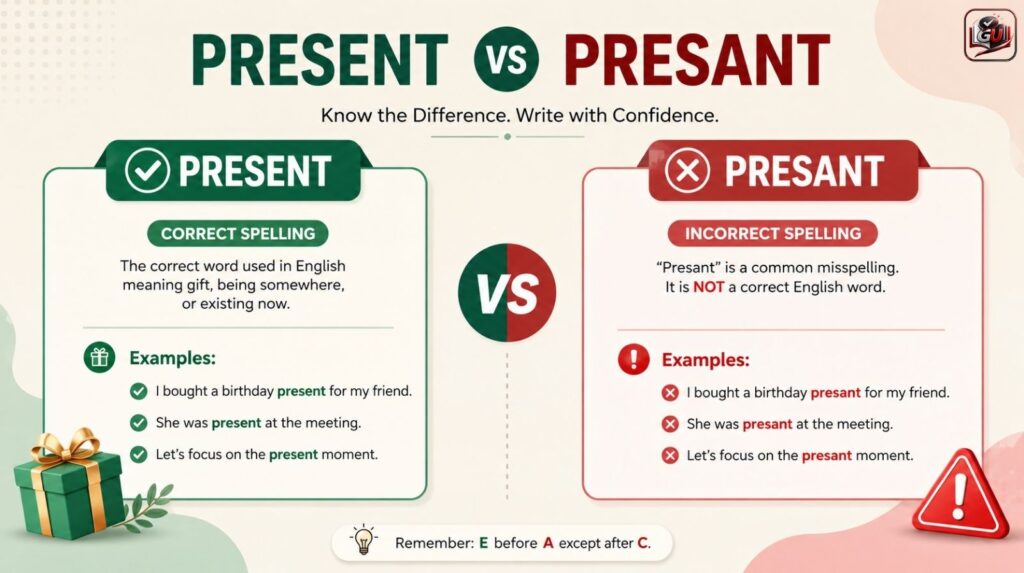
Many people get confused between Present vs Presant because both spellings look very similar at first glance. In fact, it’s one of the most common spelling mistakes found in emails, school assignments, blog posts, and even professional writing. The truth is simple: one spelling is correct, while the other is just a common typo.
Understanding the difference is important because even a small spelling mistake can make your writing look less professional and harder to trust. The good news is that this confusion is very easy to fix once you learn the correct usage.
In this guide, you’ll learn the real difference between Present and Presant, their correct meanings, common examples, and simple memory tricks that will help you avoid this mistake confidently in everyday writing.
What Is the Difference Between Present and Presant?
The main difference is simple:
| Word | Correct or Incorrect | Meaning |
|---|---|---|
| Present | ✅ Correct | Existing now, giving something, or being somewhere |
| Presant | ❌ Incorrect | Misspelling of “Present” |
The word present is the proper English spelling recognized in dictionaries and grammar rules. On the other hand, presant is not a valid English word.
Why Do People Write “Presant”?
People usually type presant because of pronunciation confusion. In fast speech, the second syllable in present may sound similar to “sant,” especially for non-native English speakers.
For example:
- ❌ I bought a birthday presant.
- ✅ I bought a birthday present.
Another example:
- ❌ She was presant at the meeting.
- ✅ She was present at the meeting.
Therefore, whenever you see presant, replace it with present.
Meaning and Usage of the Word “Present”
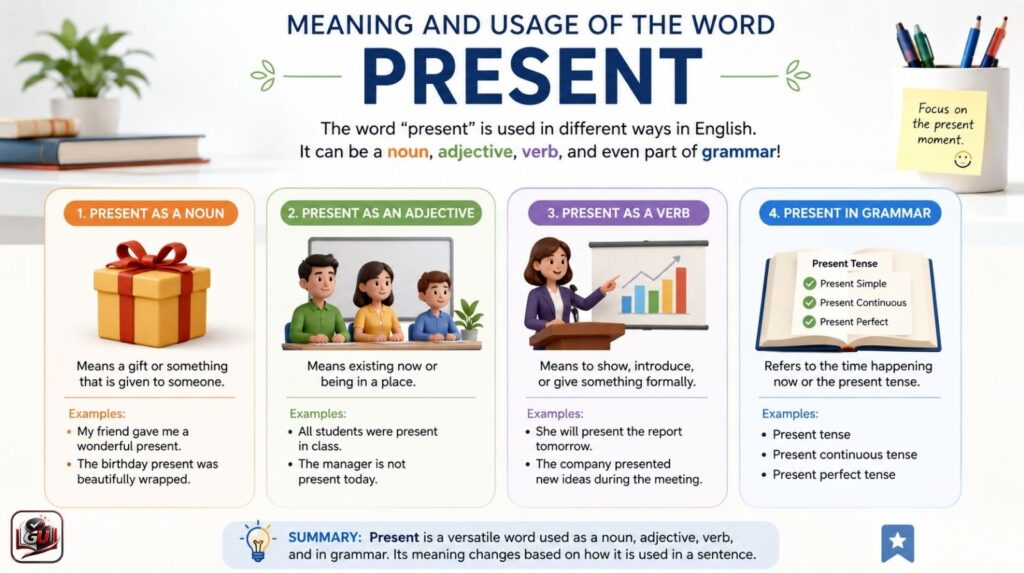
The word present is widely used in English and can function as different parts of speech depending on the sentence.
Present as a Noun
As a noun, present means a gift.
Examples:
- My friend gave me a wonderful present.
- The birthday present was beautifully wrapped.
- Children love opening presents during holidays.
Present as an Adjective
As an adjective, present means existing now or being in a place.
Examples:
- All students were present in class.
- We must focus on the present moment.
- The manager is not present today.
Present as a Verb
As a verb, present means to show, introduce, or give something formally.
Examples:
- She will present the report tomorrow.
- The company presented new ideas during the meeting.
- He presented the award to the winner.
Present in Grammar
In grammar, present also refers to time happening now.
Examples:
- Present tense
- Present continuous tense
- Present perfect tense
Because the word has multiple meanings, it appears frequently in everyday writing, business communication, education, and online content.
Why “Presant” Is Incorrect
The spelling presant does not exist in standard English dictionaries such as:
- Merriam-Webster
- Cambridge Dictionary
- Oxford Learner’s Dictionaries
Common Causes of the Mistake
1. Pronunciation Confusion
Many learners hear the word quickly and assume it contains “a” instead of “e.”
2. Fast Typing Errors
Typing too quickly often leads to spelling mistakes like:
- Presant
- Preasant
- Presnt
3. Lack of Spell Checking
Writers sometimes publish content without proofreading carefully.
Why Correct Spelling Matters
Correct spelling improves:
- SEO performance
- User trust
- Professional credibility
- Readability
- Search engine understanding
Google increasingly prioritizes high-quality, trustworthy content. Articles filled with spelling mistakes may appear less reliable to readers and search engines.
According to recent content quality discussions published by Google Search Central, clear and accurate writing helps improve user experience and content trustworthiness.
Present vs Presant in Everyday Writing
The confusion between present and presant appears in many real-world situations.
In Emails
Incorrect:
I am presant in the office today.
Correct:
I am present in the office today.
In School Assignments
Incorrect:
The teacher gave me a birthday presant.
Correct:
The teacher gave me a birthday present.
In Professional Communication
Incorrect spelling in business emails or resumes can create a poor impression.
For example:
- ❌ I was presant during the conference.
- ✅ I was present during the conference.
Even small spelling mistakes can affect professionalism, especially in formal communication.
How to Remember the Correct Spelling of Present
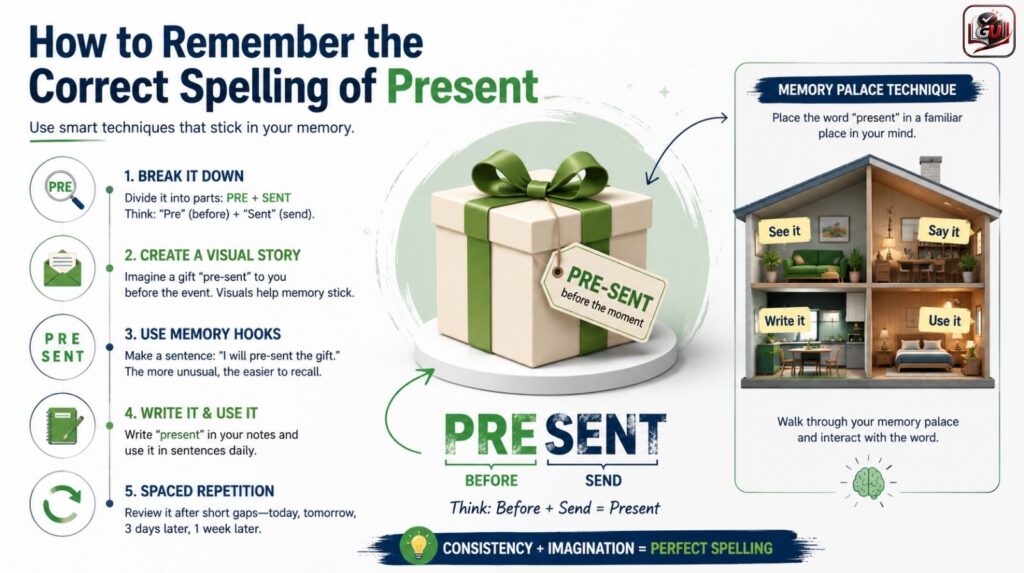
Learning simple memory tricks can help you avoid repeating the mistake.
Remember the Word “Presence”
The word presence comes from present. Since presence uses “e,” present also uses “e.”
- Presence
- Present
Both follow the same spelling pattern.
Connect It With “Gift”
When thinking about a birthday present, imagine a wrapped gift box with the letter E on it.
This visual trick helps many learners remember the correct spelling quickly.
Use Spell Check Tools
Modern writing tools can instantly catch spelling mistakes.
Popular tools include:
- Grammarly
- Hemingway Editor
- Google Docs
These tools improve grammar, spelling, and readability while helping writers publish cleaner content.
Common Sentences Using “Present” Correctly
Here are examples of the correct spelling used naturally.
Talking About Gifts
- My uncle gave me a wonderful present.
- The wedding present arrived yesterday.
- She bought a present for her friend.
Talking About Attendance
- Everyone was present at the ceremony.
- The doctor is not present today.
- Were you present during the lecture?
Talking About Time
- Focus on the present instead of the past.
- We should enjoy the present moment.
- The present situation is improving.
Talking About Presentations
- She will present her project tomorrow.
- The CEO presented a new strategy.
- They presented the award proudly.
Using these examples regularly can help reinforce the correct spelling naturally.
Real-Life Example: How a Small Spelling Mistake Hurt a Blog’s Credibility
A freelance blogger published an article about birthday celebration ideas on a small lifestyle website. Throughout the article, the word presant appeared multiple times instead of present. Initially, the writer believed the mistake was minor and would not affect readers.
However, visitors quickly noticed the repeated spelling error. Some users commented about the poor writing quality, while others left the page early because the content looked unprofessional. Over time, the article’s bounce rate increased, and engagement dropped significantly.
After reviewing the issue, the blogger corrected every instance of presant to present. They also used proofreading tools before publishing future articles.
Within several weeks, the website experienced noticeable improvements:
- Better user engagement
- Longer reading sessions
- Higher trust from readers
- Improved search visibility
This example shows how even one common spelling mistake can impact content quality, credibility, and SEO performance. Therefore, careful proofreading is essential for bloggers, businesses, students, and digital marketers.
2025–2026 Data: Why Spelling Accuracy Still Matters Online
Recent digital publishing trends continue to show the importance of accurate writing.
Key Statistics
- Studies from content marketing platforms in 2025 show users are more likely to trust websites with professional grammar and spelling.
- SEO experts report that poor readability can negatively affect user engagement signals.
- According to research shared by HubSpot, user experience and content clarity remain important ranking factors for modern content marketing strategies.
- AI-assisted search systems increasingly prioritize clear, trustworthy, and well-structured content.
What This Means for Writers
Whether you run a blog, online store, educational site, or business website, clean spelling matters because it affects:
- Reader trust
- SEO performance
- Conversion rates
- Brand image
- User experience
Therefore, correcting small spelling mistakes like presant can make a surprisingly large difference.
Present vs Presant: Quick Comparison Checklist
Here is a quick checklist to remember the correct usage.
| Checklist | Present | Presant |
|---|---|---|
| Real English word | ✅ | ❌ |
| Found in dictionaries | ✅ | ❌ |
| Correct spelling | ✅ | ❌ |
| Professional writing | ✅ | ❌ |
| Good for SEO content | ✅ | ❌ |
If you are unsure while writing, always choose present.
FAQs
Q. Is “Presant” ever correct in English?
A: No. Presant is always considered a spelling mistake. The correct word is present.
Q. Why do people confuse Present and Presant?
A: Most people confuse them because of pronunciation similarities and fast typing habits.
Q. How do you spell birthday present?
A: The correct spelling is:
Birthday present ✅
Not:
Birthday presant ❌
Q. Is Present a noun or verb?
A: It can be both. Present works as:
- A noun (gift)
- A verb (to show)
- An adjective (being there)
Q. Does spelling affect SEO?
A: Yes. Poor spelling can reduce readability, trust, and user engagement, which may indirectly impact SEO performance.
Q. What is the easiest way to remember Present?
A: Remember the word presence. Both words use the letter “e.”
Conclusion
The difference between Present vs Presant is very simple: present is the correct spelling, while presant is only a common mistake.
Although the error may seem small, accurate spelling plays a major role in communication, professionalism, readability, and SEO. Whether you are writing emails, blog posts, school assignments, or website content, using the correct spelling helps build trust and clarity.
To avoid mistakes, remember these key points:
- “Present” is the only correct spelling
- “Presant” is incorrect
- Proofreading improves writing quality
- Spell-check tools can help catch errors quickly
From now on, whenever you write about a gift, attendance, or the present moment, you can confidently use the correct word: present.
👉Keep learning with more easy grammar lessons on GrammerUpdate.com

Noor Fatima is a professional blogger specializing in spelling correction and grammar guidance. She creates clear, practical content to help readers avoid common mistakes, strengthen writing skills, and communicate with confidence in everyday and professional settings.