
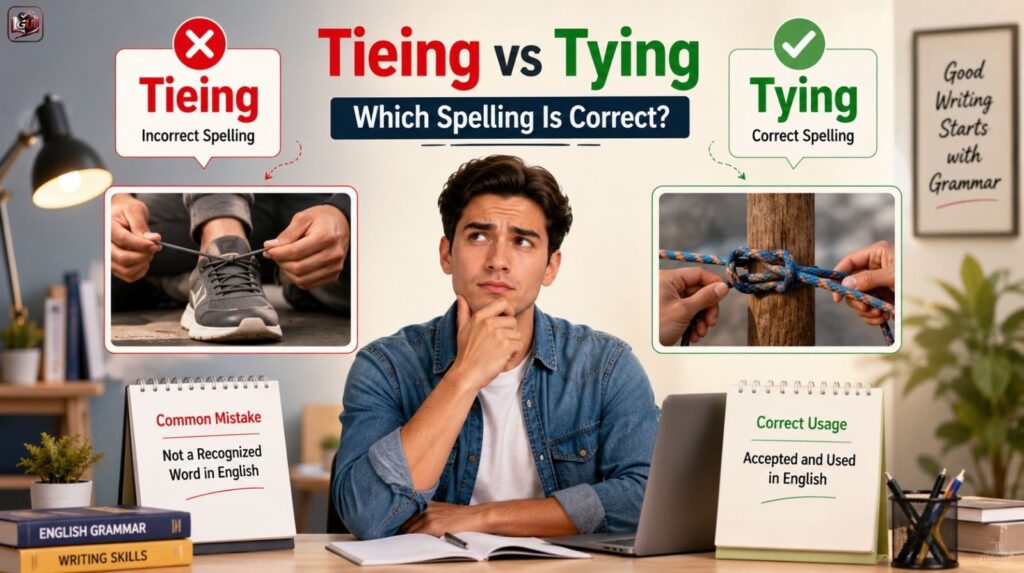
English spelling can be tricky, especially when two words look almost identical. One common example is tieing vs tying. Many writers, students, bloggers, and professionals wonder which spelling is correct when describing the act of making a knot or fastening something.
If you’ve ever typed “tieing” and seen a spell checker underline it, you’re not alone. This confusion happens because English spelling rules are not always straightforward. However, understanding the correct form can instantly improve your writing accuracy and credibility.
In this guide, you’ll learn the difference between tieing and tying, discover why one spelling is preferred, see real-world examples, explore common mistakes, and learn practical tips to remember the correct usage.
What Is the Difference Between Tieing and Tying?
The short answer is simple:
| Word | Correct? | Meaning |
|---|---|---|
| Tying | ✅ Yes | The present participle of “tie” |
| Tieing | ❌ Usually No | Considered a misspelling in modern English |
When referring to the act of fastening, securing, or making a knot, tying is the correct spelling.
Examples of Correct Usage
- She is tying her shoelaces.
- They are tying the rope to the dock.
- He spent the afternoon tying fishing knots.
Examples of Incorrect Usage
- She is tieing her shoes. ❌
- We are tieing the package. ❌
In standard English, dictionaries recognize tying as the accepted form.
Why Is “Tying” the Correct Spelling?
Many people assume that adding “-ing” to “tie” should create tieing, just as “agree” becomes “agreeing.”
However, English contains exceptions.
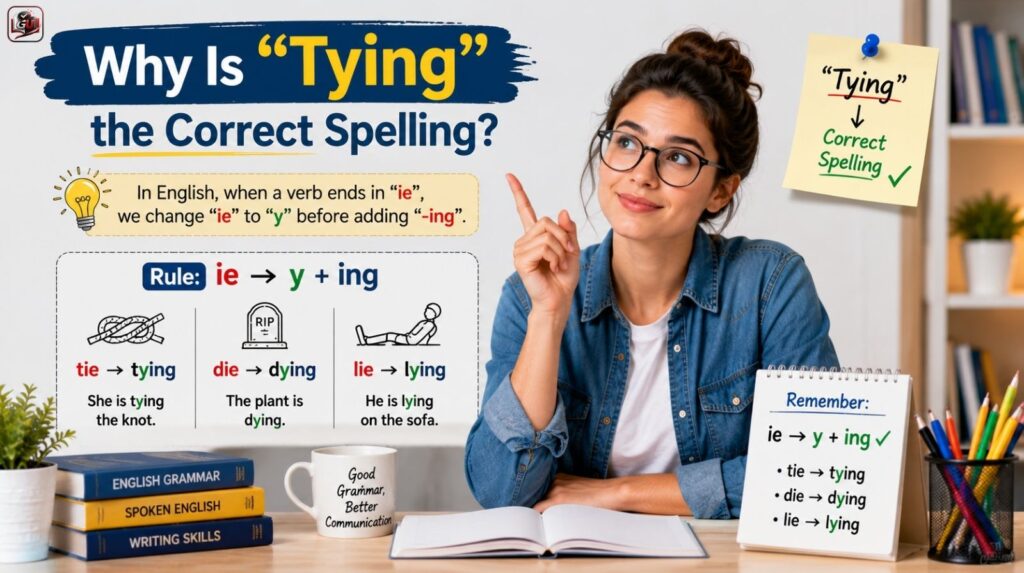
When the verb tie changes to its present participle form, the final “ie” is replaced with a “y” before adding “-ing.”
The Rule Behind Tying
ie → y + ing
Examples:
| Base Verb | -ing Form |
|---|---|
| Tie | Tying |
| Die | Dying |
| Lie | Lying |
This spelling rule helps maintain smoother pronunciation and readability.
Why Not “Tieing”?
If English followed a completely predictable pattern, “tieing” might seem logical. However, historical spelling conventions established tying as the standard form centuries ago.
Therefore, modern dictionaries, style guides, and educational institutions consistently recommend tying.
How the “IE to Y” Rule Works
Understanding the broader spelling rule can prevent similar mistakes.
Verbs That Follow the Same Pattern
Die → Dying
- The plant is dying from lack of water.
- Several leaves are dying on the tree.
Lie → Lying
- He is lying on the couch.
- The documents are lying on the desk.
Tie → Tying
- She is tying a ribbon around the gift.
- The sailor is tying the boat securely.
Why This Rule Exists
English pronunciation evolved over centuries. Replacing “ie” with “y” before adding “-ing” creates a cleaner visual structure and avoids awkward letter combinations.
As a result:
- Dieing ❌
- Lieing ❌
- Tieing ❌
But:
- Dying ✅
- Lying ✅
- Tying ✅
Tieing vs Tying in Real-Life Writing
The confusion between these spellings appears frequently online.
Many writers type “tieing” because it seems more consistent with words like:
- seeing
- agreeing
- fleeing
However, search engines, grammar tools, and professional editors recognize tying as the correct spelling.
Common Situations Where “Tying” Appears
Everyday Activities
- Tying shoelaces
- Tying gift ribbons
- Tying fishing knots
Business Writing
- Tying performance metrics to goals
- Tying results to company objectives
Academic Writing
- Tying evidence to conclusions
- Tying research findings together
In every case, tying remains the accepted spelling.
A Real-Life Example of How This Mistake Affected a Blog
Several years ago, a small educational blog published an article about outdoor survival skills. The author repeatedly used the phrase “tieing knots” throughout the content.
Initially, the article attracted visitors because the topic was valuable. However, readers began leaving comments pointing out the spelling mistake. Some even questioned the writer’s expertise because the error appeared dozens of times.
The blog owner later reviewed the content using grammar-checking software and discovered the issue. After replacing every instance of “tieing” with “tying,” the article appeared more professional and trustworthy.
Interestingly, user engagement improved afterward. Readers spent more time on the page, and the article received fewer corrections from visitors.
This example highlights an important lesson: even small spelling errors can affect credibility. While readers may still understand your meaning, repeated mistakes can distract from your message and reduce confidence in your expertise.
Whether you’re writing blog posts, emails, academic papers, or business documents, using the correct spelling demonstrates attention to detail and professionalism.
Tieing vs Tying: Quick Comparison Table
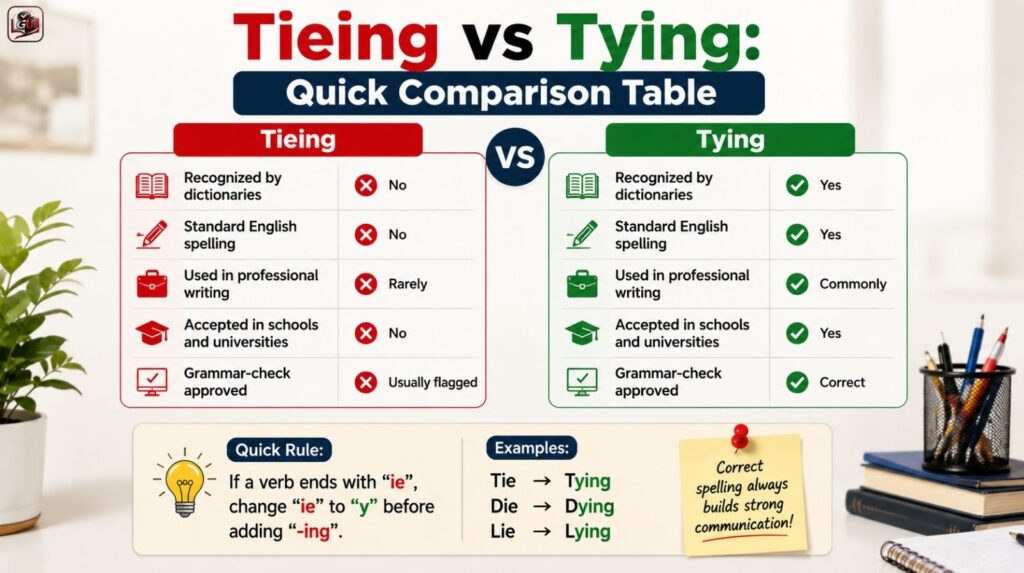
Side-by-Side Comparison
| Feature | Tieing | Tying |
|---|---|---|
| Recognized by modern dictionaries | ❌ No | ✅ Yes |
| Standard English spelling | ❌ No | ✅ Yes |
| Used in professional writing | ❌ Rarely | ✅ Commonly |
| Accepted in schools and universities | ❌ No | ✅ Yes |
| Grammar-check approved | ❌ Usually flagged | ✅ Correct |
Quick Rule to Remember
If a verb ends in -ie, change it to -y before adding -ing.
Tie → Tying
This simple rule eliminates confusion instantly.
Data and Trends: What Writers Search for in 2025–2026
Language-related searches continue growing as more people create content online.
According to trends reported by search platforms and digital marketing studies during 2025–2026:
- Millions of users search for grammar and spelling questions every month.
- Confusing word pairs remain among the most searched language topics.
- AI-powered grammar tools have increased awareness of spelling accuracy.
- Content creators increasingly optimize articles for readability and trustworthiness.
Grammar-related searches such as:
- “tying or tieing”
- “which spelling is correct”
- “common English spelling mistakes”
continue attracting significant search interest because writers want clear, authoritative answers.
This trend reflects the growing importance of accurate communication in blogging, education, business, and digital publishing.
Common Mistakes People Make With Tying
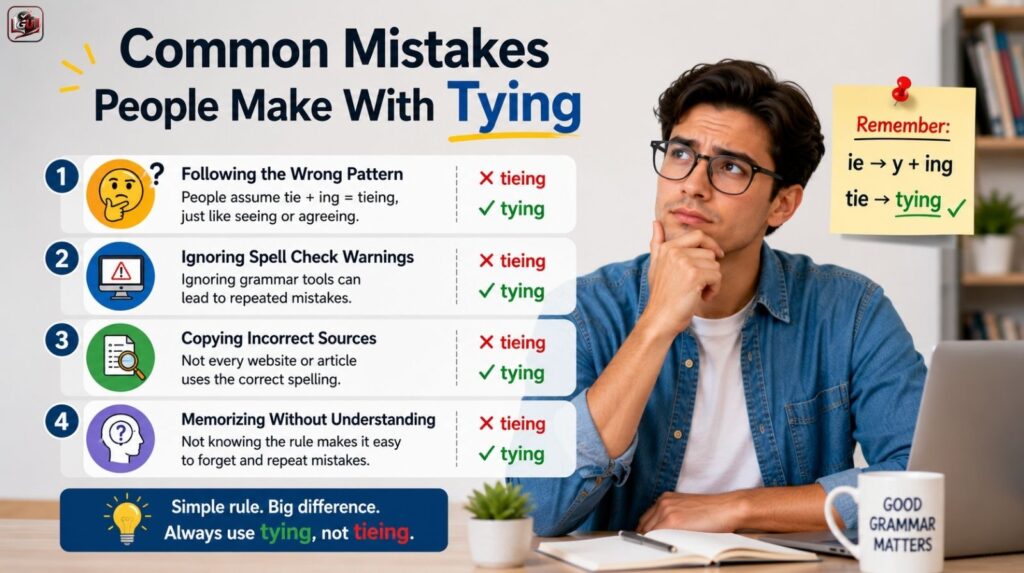
Even experienced writers occasionally make errors.
Mistake #1: Following the Wrong Pattern
People assume:
- agree → agreeing
- see → seeing
Therefore:
- tie → tieing
This assumption is understandable but incorrect.
Mistake #2: Ignoring Spell Check Warnings
Modern writing tools often flag tieing as a spelling mistake. Ignoring these alerts can allow errors to remain in published content.
Mistake #3: Copying Incorrect Online Sources
Not every website follows proper grammar standards. Some older articles and forum posts contain spelling mistakes that spread confusion.
Mistake #4: Memorizing Without Understanding
Learning the rule behind tying helps you avoid similar mistakes with dying and lying.
How to Remember the Correct Spelling
Remembering the right form doesn’t have to be difficult.
Method 1: Learn the Rule
ie → y + ing
Examples:
- tie → tying
- die → dying
- lie → lying
Method 2: Visual Association
Think of the word:
TYING
Notice the central “Y.”
Whenever you add “-ing” to a verb ending in “ie,” imagine the “ie” transforming into “y.”
Method 3: Practice in Sentences
- I am tying my shoes.
- She is tying a ribbon.
- We are tying the package securely.
Frequent exposure reinforces the correct spelling naturally.
When Might You See “Tieing”?
Although uncommon, you may occasionally encounter tieing in historical texts, older documents, specialized references, or user-generated content.
However, modern style guides and dictionaries overwhelmingly favor tying.
Professional Recommendation
For:
- Blog posts
- Academic papers
- Emails
- Marketing content
- Business communication
Always use tying.
Doing so ensures your writing aligns with current English standards.
FAQs
Q. Is tieing ever correct?
A: In modern English, tieing is generally considered incorrect when referring to the act of fastening or making a knot. Tying is the accepted spelling.
Q. Why is tying spelled with a Y?
A: English spelling rules change many verbs ending in ie to y before adding -ing, resulting in tying.
Q. Is tying used in British and American English?
A: Yes. Both British and American English use tying as the standard spelling.
Q. What is the rule for tie to tying?
A: Replace ie with y, then add -ing:
tie → tying
Q. Is tieing a common spelling mistake?
A: Yes. Many writers mistakenly assume that adding “-ing” directly to “tie” creates “tieing.”
Q. What are similar examples to tying?
A: Other examples include:
- die → dying
- lie → lying
Q. Do grammar checkers recognize tieing?
A: Most grammar and spell-check tools flag tieing as an error and recommend tying.
Authoritative References
For further reading, consult trusted language resources:
- Merriam-Webster Dictionary
- Cambridge Dictionary
- Oxford Learner’s Dictionaries
Conclusion
When comparing tieing vs tying, the answer is clear: tying is the correct spelling in modern English. The word follows the common spelling rule that changes “ie” to “y” before adding “-ing.”
While tieing may occasionally appear online or in older texts, it is generally regarded as a misspelling today. Understanding this rule not only helps you use tying correctly but also improves your grasp of similar words such as dying and lying.
The next time you’re writing about fastening a rope, securing shoelaces, or connecting ideas, remember the correct form is tying. Consistent, accurate spelling strengthens your credibility, improves readability, and helps your writing appear more professional.
👉Keep learning with more easy grammar lessons on GrammerUpdate.com

Noor Fatima is a professional blogger specializing in spelling correction and grammar guidance. She creates clear, practical content to help readers avoid common mistakes, strengthen writing skills, and communicate with confidence in everyday and professional settings.