English is full of words that look right at first glance but turn out to be incorrect. One example is the confusion between Abley vs Ably. If you’ve ever paused while writing an email, assignment, or report and wondered which spelling to use, you’re certainly not the only one.
The mistake usually happens because the word able is familiar, making abley seem like a logical spelling. However, English doesn’t always follow the patterns we expect. A small spelling difference can change whether a word is considered correct or incorrect, especially in formal writing.
So, is it Abley or Ably? Which spelling should you use, and why do so many people get it wrong? In this guide, we’ll break down the correct spelling, explain the grammar behind it, look at real examples, and share a few simple tricks to help you remember the difference. By the end, you’ll know exactly which word belongs in your writing and use it with confidence.
What Is the Correct Spelling: Abley or Ably?
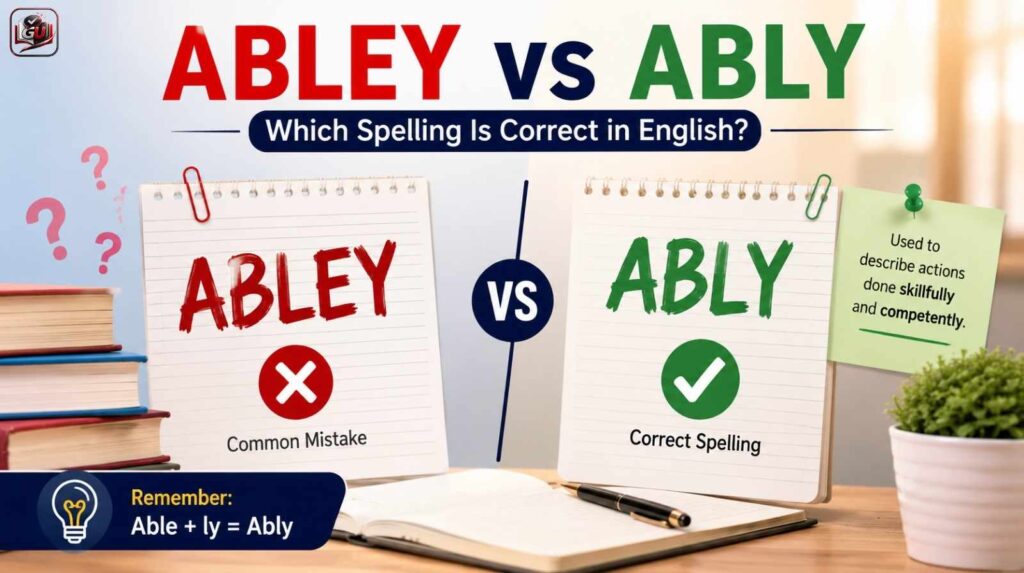
The correct spelling is Ably.
Abley is generally considered a misspelling and is not recognized as a standard English adverb in modern dictionaries.
Quick Answer
| Word | Correct? | Meaning |
|---|---|---|
| Ably | ✅ Yes | In a skillful, competent, or capable manner |
| Abley | ❌ No | Common misspelling of “ably” |
Definition of Ably
Ably is an adverb that means:
In a competent, skillful, effective, or capable way.
Examples:
- She handled the project ably despite the tight deadline.
- The lawyer ably defended her client in court.
- He ably managed the team during a challenging period.
In all these examples, ably describes how someone performed an action effectively.
Why Do People Write “Abley” Instead of “Ably”?
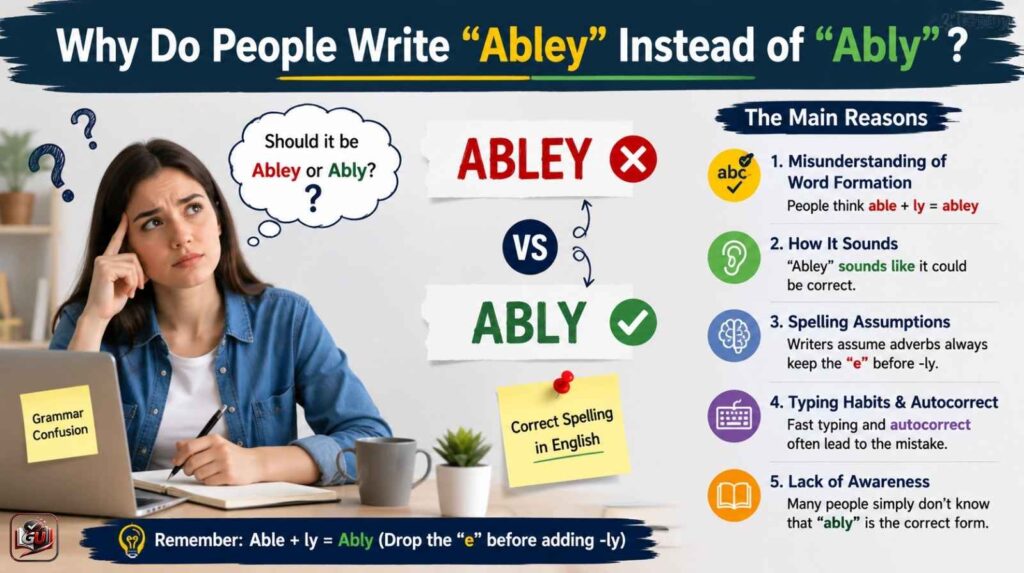
The confusion often comes from English spelling patterns.
Many adverbs end with -ly, such as:
- Quickly
- Slowly
- Carefully
- Wisely
Because the adjective able ends with the letter “e,” some writers assume the adverb should become abley. However, English grammar follows a different rule in this case.
The Adverb Formation Rule
When forming an adverb from able, the final “e” is dropped before adding -ly.
Able + ly = Ably
Not:
Able + ly = Abley ❌
Similar Examples
| Adjective | Correct Adverb |
|---|---|
| True | Truly |
| Due | Duly |
| Whole | Wholly |
| Able | Ably |
These examples show that English often drops letters when creating adverbs.
Common Typing Habits
Another reason people write abley is autocorrect behavior or phonetic spelling. Since “abley” sounds plausible when spoken, writers sometimes type it without realizing it’s incorrect.
Meaning and Usage of Ably in English
The word ably is commonly used in formal and professional writing.
It emphasizes competence, efficiency, and skill.
Ably in Professional Communication
Examples:
- The manager ably coordinated the entire event.
- The consultant ably solved the company’s operational issues.
- The engineer ably led the technical implementation.
Ably in Academic Writing
Examples:
- The researcher ably presented the findings.
- The student ably defended her thesis during the examination.
Ably in Everyday Language
Examples:
- She ably cooked dinner for twenty guests.
- He ably repaired the damaged bicycle.
Although the word is somewhat formal, it remains common in written English.
Abley vs Ably: Side-by-Side Comparison
Understanding the differences becomes easier with a direct comparison.
| Feature | Abley | Ably |
|---|---|---|
| Standard English Word | No | Yes |
| Found in Major Dictionaries | No | Yes |
| Correct Grammar | No | Yes |
| Suitable for Academic Writing | No | Yes |
| Suitable for Professional Writing | No | Yes |
| Meaning | None in standard English | Competently or skillfully |
Which Should You Use?
Always use Ably when you want to describe someone performing a task competently or effectively.
Avoid Abley because readers may view it as a spelling mistake.
Real-Life Example: How One Small Spelling Mistake Affected Professional Writing
A marketing coordinator was preparing an annual performance report for senior management. The report highlighted employee achievements and included statements such as:
“Sarah abley managed the campaign and exceeded all performance targets.”
Because the report was shared with executives and external stakeholders, the company’s editor reviewed the document before publication. During proofreading, the editor noticed that abley was used multiple times throughout the report.
Although the mistake was minor, it created an impression of poor attention to detail. In professional communication, even small spelling errors can affect credibility and professionalism.
The editor corrected every instance to ably, resulting in sentences such as:
“Sarah ably managed the campaign and exceeded all performance targets.”
The revised report appeared more polished and aligned with standard English conventions.
This example demonstrates why understanding commonly confused spellings matters. While readers may still understand what the writer intended, using the correct word helps establish authority, trustworthiness, and clarity.
Language Data and Usage Trends (2025–2026)
Recent language-analysis tools and digital writing platforms continue to show that spelling errors remain one of the most common writing issues worldwide.
According to data and guidance published by educational and language-focused organizations such as Google Search, Merriam-Webster, and Grammarly, spelling accuracy significantly affects readability, user trust, and content quality standards.
Key observations from 2025–2026 language trends include:
- Readers tend to trust content with fewer spelling errors.
- Search engines increasingly prioritize high-quality, well-edited content.
- Professional communication standards continue to emphasize grammatical accuracy.
- Common misspellings frequently appear in online searches because users seek clarification.
As a result, understanding distinctions such as Abley vs Ably helps writers produce more credible and professional content.
Helpful References
- Google Search Central:
- Grammarly Writing Resources:
- Merriam-Webster Dictionary:
How to Remember the Difference Between Abley and Ably
If you frequently forget the correct spelling, try this simple memory trick.
Memory Rule
Think:
Able people perform tasks ably.
Notice that both words share the same root.
- Able = capable
- Ably = in a capable manner
Easy Formula
Able → Ably ✅
Not:
Able → Abley ❌
Quick Check Before Writing
Ask yourself:
“Am I describing how someone performed an action?”
If yes, the correct adverb is usually ably.
Example:
- She completed the task ably.
- He negotiated the agreement ably.
Common Mistakes Writers Make
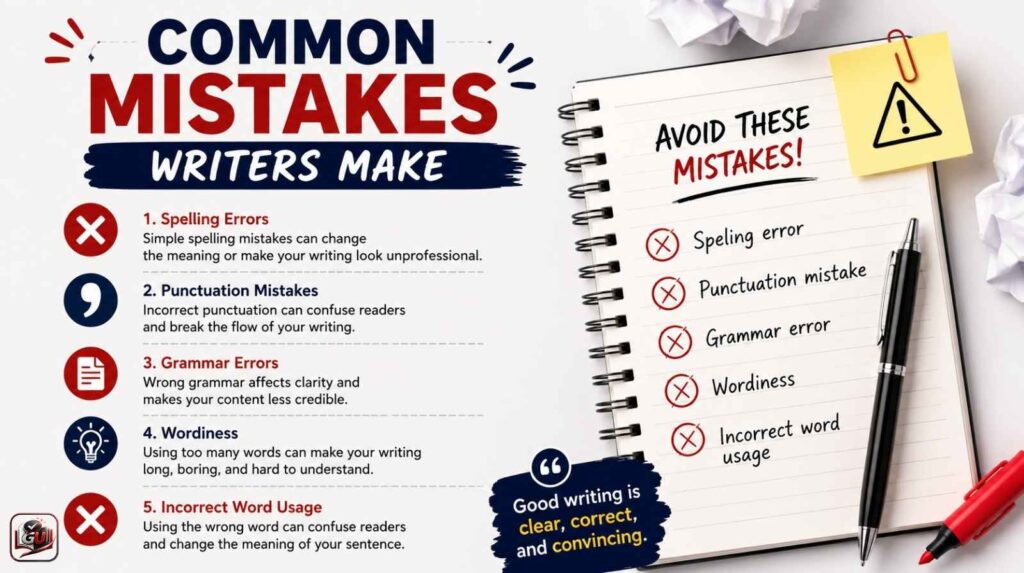
Many writers make the same errors when using this word.
Mistake #1: Adding an Extra “e”
❌ He abley managed the project.
✅ He ably managed the project.
Mistake #2: Assuming Every Adverb Keeps the Original Word
English contains exceptions.
Examples:
- True → Truly
- Due → Duly
- Whole → Wholly
- Able → Ably
Mistake #3: Relying Only on Sound
English spelling does not always match pronunciation perfectly. Always verify unusual words in a trusted dictionary.
FAQs
Q. Is Abley a real word?
A: No. Abley is generally considered a misspelling of ably and is not recognized as a standard English adverb.
Q. What does ably mean?
A: Ably means performing something skillfully, competently, effectively, or capably.
Q. How do you spell the adverb form of able?
A: The correct adverb form of able is ably.
Q. Can I use abley in formal writing?
A: No. Formal, academic, and professional writing should use ably instead.
Q. Why is the “e” removed from able?
A: English spelling conventions often remove letters when forming adverbs. Therefore, able becomes ably rather than abley.
Q. Is ably commonly used?
A: Yes. Although somewhat formal, ably is frequently used in professional, academic, legal, and business writing.
Q. What is an example sentence using ably?
A: Example:
The director ably guided the organization through a period of rapid growth.
Conclusion
When comparing Abley vs Ably, the answer is straightforward: Ably is the correct spelling, while Abley is a common misspelling.
The word ably means performing a task skillfully, competently, or effectively. It is widely accepted in professional, academic, and everyday English. Understanding this distinction helps improve writing accuracy, credibility, and confidence.
Whenever you’re tempted to write abley, remember the simple rule:
Able → Ably
Using the correct spelling will help your writing appear more polished, professional, and grammatically accurate. Before publishing any document, take a moment to proofread and ensure that ably is the word you’re using.
👉Keep learning with more easy grammar lessons on GrammerUpdate.com

Noor Fatima is a professional blogger specializing in spelling correction and grammar guidance. She creates clear, practical content to help readers avoid common mistakes, strengthen writing skills, and communicate with confidence in everyday and professional settings.